


Window view productivity might be the most effortless upgrade you’ve never thought about. You didn’t need a better app. You didn’t need a new morning routine. You didn’t need a $400 ergonomic chair. You just needed to move your desk four feet to the left.
Sounds too simple to be true? A 2026 peer-reviewed study published in the Journal of Economic Behavior & Organization by researchers Xuan Li and Xiang Zhou disagrees. After analyzing thousands of Chinese college entrance exam results — with randomized seating assignments — they found that students seated by a window with an outside view scored 9.1% of a standard deviation higher than their peers in blocked-view seats. Same exam. Same students. Same pressure. Just a window.
That’s not a productivity hack. That’s architecture quietly doing the work for you. And once you understand why it works, you’ll never look at your workspace the same way again — pun absolutely intended.
What Is Window View Productivity?
Window view productivity isn’t a buzzword someone invented to sell you a standing desk. It’s the measurable cognitive benefit that comes from having a natural or outdoor view while working — and it’s grounded in decades of environmental psychology research.
The core idea is this: your brain has two attention modes. The first is directed attention — the focused, effortful kind you use when writing a report, solving a problem, or trying to remember where you left your keys (again). The second is involuntary attention — the effortless, wandering kind that gets quietly activated when you watch clouds drift by, look at trees moving in the wind, or stare at the sea from a balcony while pretending to answer emails.
Here’s the key insight: directed attention is a limited resource. It gets depleted. And when it runs out, you don’t just get tired — you get cognitively foggy, irritable, and incapable of making good decisions. We’ve all been there at 3 PM on a Tuesday, staring at a screen and wondering if the sentence we just wrote is grammatically correct or complete nonsense. (It was probably both.)
Window view productivity works because natural views activate involuntary attention, which gives your directed attention system a chance to quietly recharge — even while you’re technically still at your desk. You’re not taking a break. Your brain is taking a micro-break for you. Through your eyes. Via a window.
This mechanism is so well-documented that it has its own name: Attention Restoration Theory (ART), developed by psychologists Stephen and Rachel Kaplan. It proposes that natural environments trigger a state called soft fascination — engaging enough to hold your gaze without demanding cognitive effort, which is exactly the condition your brain needs to recover its focus capacity.
The Science Behind Window View Productivity
Before we get into the six strategies, let’s look at what the research actually says — because the numbers are more dramatic than most people expect.
The Exam Score Study
The Li and Zhou study published in the Journal of Economic Behavior & Organization in 2026 is the most compelling direct evidence for window view productivity to date. Using randomized seating data from China’s high-stakes gaokaocollege entrance exam, the researchers found that students with an outside window view scored 9.1% of a standard deviation higher than students in the same room with blocked views.
To put that in context: that’s comparable in magnitude to some well-funded educational interventions. Not a mindset shift. Not years of extra studying. A window.
The study explicitly links this finding to Attention Restoration Theory, suggesting that even brief, passive exposure to an outside view during cognitively demanding work provides measurable restoration of directed attention — enough to show up in exam performance.
The Biophilic Workplace Data
It’s not just students. A study of 7,600 office workers across 16 countries, led by organizational psychologist Professor Sir Cary Cooper and commissioned by Interface, found that employees working in environments with natural elements — including outdoor views — reported 15% higher wellbeing, scored 6% higher on productivity measures, and showed 15% higher creativity scores compared to colleagues without natural elements.
In other words, window view productivity isn’t a student phenomenon. It scales to the workplace, across industries, across cultures.
The Hospital Window That Changed Everything
Here’s a story that predates all of this research and arguably started the whole conversation. In 1984, researcher Roger Ulrich published a now-famous study in Science showing that surgical patients whose hospital room windows faced a natural scene — trees, sky, greenery — recovered faster, needed less pain medication, and were discharged sooner than patients whose windows faced a brick wall.
Same surgery. Same hospital. Same nurses. Just a different window view.
If a window view can accelerate physical recovery from surgery, the idea that it might help you concentrate better during your Tuesday 3 PM slump seems not just plausible but almost modest.
6 Ways to Maximize Window View Productivity
Now the practical part. Not everyone has a corner office with panoramic views of the mountains (we know, we know — deeply unfair). But window view productivity is more accessible than you might think, and the principles behind it can be applied in surprisingly creative ways.
1. Window View Productivity Starts With Desk Placement
This one is almost embarrassingly simple, but it’s the most impactful change most people never make. If you have a window in your home or office — any window, facing anything that isn’t a wall — your desk should be oriented so that you can look at it with minimal effort.
Not with your back to it (you’ll miss the view entirely). Not facing directly into it (screen glare will make you want to throw your laptop out of the very window you’re trying to benefit from). Side-on is the sweet spot — natural light from the left or right, outdoor view in your peripheral vision, screen comfortably visible.
The Li and Zhou study found that even students who weren’t actively looking out the window benefited from being near one. Proximity and passive availability of the view was enough to deliver the cognitive effect. Your brain doesn’t need you to stare longingly at trees for 20 minutes. It just needs to know the option is there.
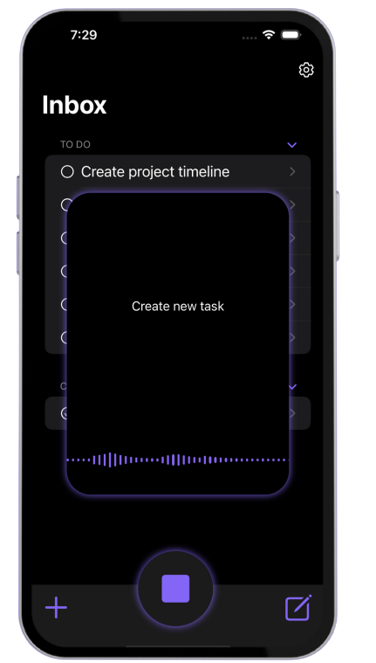
Before you do anything else today, open Vozly and add “rearrange desk toward window” to your task list. Speak it out loud. It’ll take 15 minutes and it might be the highest-ROI productivity change you make this year.
2. Use Window View Productivity Micro-Breaks Intentionally
Here’s something the research tells us that most people do accidentally and intuitively — and then feel guilty about. Staring out the window isn’t procrastination. It’s cognitive maintenance.
When directed attention starts to fatigue — when the words on your screen stop making sense, when you’ve read the same paragraph four times, when you find yourself checking your phone for the seventh time in an hour — the correct response is not to push harder. It’s to look out the window for 60 to 90 seconds.
Not at your phone. Not at a YouTube video. Out the window. At something that moves softly and requires nothing from you — clouds, trees, passing cars, a neighbor walking a ridiculously tiny dog. That soft fascination state, activated in under two minutes, measurably restores directed attention capacity according to Attention Restoration Theory research.
The mistake most people make is waiting until they’re completely depleted before taking any kind of break. Window view productivity works best as a maintenance strategy, not an emergency rescue. Every 45 to 60 minutes of focused work, take 90 seconds and look outside. Your afternoon brain will thank your morning brain for this.
Pro tip: use Vozly to set a voice reminder. Speak “remind me to look out the window in 50 minutes” and let the app handle the timing. Because even good habits need a nudge sometimes.
3. Build a Window View Productivity Morning Ritual
There’s a reason so many people report that their best thinking happens in the first hour of the morning — and part of it is almost certainly environmental. Morning light through a window is qualitatively different from afternoon artificial light. It’s softer, more natural in spectrum, and — if you’re lucky enough to have an east-facing window — it comes with the quiet drama of a sunrise, which is almost impossible to look at without feeling at least slightly optimistic about the day ahead.
A deliberate window view productivity morning ritual means starting your first work session of the day positioned near natural light, with your coffee (or tea, we don’t judge), and spending the first five minutes of your day looking out — not at a screen, not at your phone — before you do anything else.
This isn’t meditation. It’s not a mindfulness exercise (unless you want it to be). It’s simply giving your directed attention system a natural, well-lit runway before you ask it to take off into the demands of the day.
While you’re at it, speak your three most important tasks for the day into Vozly during this window-facing five minutes. Natural light, cognitive restoration, and a spoken intention capture — all before 9 AM. This is what proactive productivity actually looks like in practice.
4. Window View Productivity for Deep Work Sessions
Deep work — the cognitively demanding, distraction-free kind that produces your best output — is notoriously hard to sustain. Most people max out at 60 to 90 minutes before the quality of their thinking starts to noticeably decline.
Here’s a window view productivity hack that can meaningfully extend that window (there’s that word again): position yourself near a view for your deep work sessions specifically, rather than treating window access as a passive ambient feature of your workspace.
The research suggests that the benefit of a natural view is strongest during cognitively demanding tasks — precisely because those tasks place the heaviest demands on directed attention, which is exactly what the view helps restore. Choosing your deep work location based on window access is therefore not a preference but a performance decision.
If you work from home: claim the room or corner with the best outdoor view for your most important work hours. If you work in an office: the corner desk by the window is not a status symbol — it’s a productivity asset. Negotiate accordingly. If you work from cafés: the window seat isn’t just aesthetically nice. It’s where your brain works best. Order first, then stake your claim.
5. What to Do When You Don’t Have a Window
Okay, real talk. Not everyone has a window. Some of us work in basement offices, inner rooms, or — in the most architecturally tragic cases — cubicles in the center of open-plan floors so large you’d need binoculars to see a wall.
If this is you, first: we’re sorry. Second: there are evidence-based alternatives.
Nature photographs and nature videos — yes, really — have been shown to partially activate the same Attention Restoration Theory mechanisms as actual window views. A study published in the Journal of Environmental Psychology found that viewing nature images produced measurable improvements in attention restoration compared to urban or abstract images.
This means a high-quality, large-format photograph of a landscape, ocean, or forest on your wall is doing cognitive work — not just aesthetic work. Biophilic design research confirms that even indirect nature references (natural materials, organic patterns, images of natural scenes) contribute to the window view productivity effect in windowless environments.
Other options: a small indoor plant in your eyeline activates similar soft fascination responses. A desktop fountain with gentle water sounds triggers Attention Restoration Theory through the auditory channel. And if all else fails — scheduling a 10-minute walk outside between work sessions delivers the full-strength version of what a window view approximates.
Use Vozly to voice-capture your tasks before you leave for that walk. You’ll come back with a clearer head, a captured task list, and a restored directed attention system ready for another focused session. That’s emotional regulation and window view productivity working together.
6. Design Your Entire Day Around Window View Productivity
The most advanced version of window view productivity isn’t just about where you sit — it’s about structuring your entire day around the relationship between light, view, and cognitive demand.
Here’s a framework that puts the research to work:
Morning (natural light peak): High-focus deep work. Position yourself at your best window. Tackle your hardest, most cognitively demanding tasks when your directed attention is freshest and the natural light is brightest.
Late morning: Creative and collaborative work. Still near the window, but the tasks are less demanding on directed attention — brainstorming, calls, writing first drafts.
Early afternoon (the 2–3 PM dip): This is when your circadian rhythm naturally dips and directed attention reaches its daily low point. Don’t fight it with caffeine. Step outside for 10 minutes or take your window micro-break. Speak a quick Vozly check-in on where you are in your work and what’s next.
Mid-afternoon: Administrative tasks, emails, routine decisions. Lower cognitive demand, so window access is nice but less critical.
Late afternoon: If you have a second wind (many people do between 4 and 6 PM), use it for a second focused session near the window.
This isn’t a rigid schedule — it’s a framework that treats your cognitive capacity as a renewable resource and your environment as one of the tools for renewing it. Window view productivity at its most sophisticated isn’t a desk placement tip. It’s a philosophy of working with your brain’s natural rhythms rather than against them.
Window View Productivity and Voice Capture: The Missing Link
Here’s something the researchers didn’t mention — because they were studying exam performance, not everyday knowledge work — but that matters enormously for how you apply window view productivity in practice.
The cognitive benefit of a window view restores your capacity for directed attention. But capacity without direction is just potential. You still need to decide what to focus on, capture what you’re thinking, and make sure your best ideas don’t evaporate between the window and the keyboard.
This is exactly where Vozly fits in. Some of the most valuable moments for voice capture are the ones that happen during or immediately after a window view micro-break — when your brain has just had a soft-fascination reset and is operating with restored clarity. That’s when insights surface. That’s when you suddenly know how to solve the problem you’ve been stuck on. That’s when the second brain habit pays off most visibly.
Speak the insight into Vozly before the clarity fades. Your restored directed attention is a limited window — pun intended, again — and capturing what it produces in real time is the bridge between environmental optimization and actual output.
Final Thoughts on Window View Productivity
The research is clear, the mechanism is well-understood, and the intervention is free: window view productivity is one of the most evidence-backed, lowest-effort changes you can make to how and where you work.
You don’t need a sea-view apartment (though if you have one, please reconsider any life choices that would take you away from it). You need a window. Or a photograph of one. Or a plant. Or a 10-minute walk. The principle scales down gracefully because the underlying mechanism — giving your directed attention system a natural break through soft fascination — is accessible in many forms.
What the Li and Zhou study really tells us isn’t just that window seats are nice. It’s that your environment is actively shaping your cognitive performance in ways that you’re probably not measuring, noticing, or optimizing for. The students who scored higher didn’t try harder. Their environment quietly worked for them.
Your environment can do the same. Move the desk. Open the blinds. Speak your tasks into Vozly. Look out the window.
Your brain will take it from there.