

Proactive productivity is the single most important shift you can make in how you work — and almost nobody is practicing it. Think about the last time you sat down to work and actually made it through your real to-do list without getting pulled into someone else’s urgency. A Slack message here, an email there, a quick request that turned into a 45-minute detour. Sound familiar? That’s reactive mode, and most of us live in it all day without even realizing it. The good news is that proactive productivity isn’t some elite skill reserved for CEOs and professional athletes. It’s a habit — and one you can start building today, in less time than it takes to read a notification.
In this post, we’re going to break down exactly what proactive productivity means, why reactive mode is quietly sabotaging your best work, and six practical voice-powered strategies that will help you take your day back — starting right now.
What Is Proactive Productivity — and Why Does It Matter?
Before we get into the how, let’s get clear on the what. Proactive productivity means intentionally deciding in advance what you’re going to work on, and protecting that decision from the constant stream of interruptions that modern life throws at you. It’s the opposite of reactive mode, where your attention is permanently on loan to whoever or whatever demands it most loudly in any given moment.
The distinction sounds simple. The reality is much harder to live by.
Research from the University of California, Irvine found that it takes an average of 23 minutes and 15 seconds to fully regain focus after an interruption. That’s not 23 minutes wasted — that’s 23 minutes of cognitive recovery time every single time your phone buzzes, your inbox pings, or a colleague stops by with “just a quick question.” If you’re interrupted five times in a morning, you’ve potentially lost nearly two full hours of productive capacity before lunch.
This is the cost of reactive mode. And it’s one most people have simply accepted as normal.
Proactive productivity flips this. Instead of waiting to see what the day brings and responding to it, you make your decisions first — what gets done, in what order, and when. You show up to your day with a plan rather than an open inbox.
The question is: how do you actually build that habit when you’re already deep in reactive patterns?
Why Voice Is the Fastest Tool for Proactive Productivity
Here’s something that doesn’t get talked about enough: the main reason people stay stuck in reactive mode isn’t laziness or poor time management. It’s friction. Planning ahead requires more effort than reacting. Opening a notebook, typing out your tasks, building a structured schedule — all of that has a startup cost that, when you’re already overwhelmed, feels impossible.
This is where voice comes in.
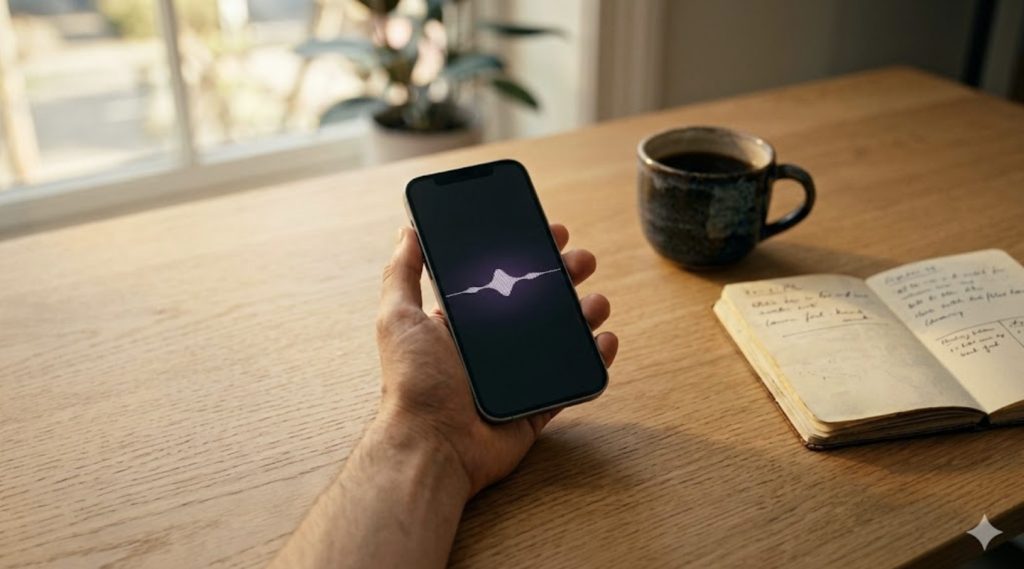
Speaking is the lowest-friction form of human communication. We can speak roughly four times faster than we can type, and approximately ten times faster than we can write by hand. When the barrier to capturing your intentions is this low, proactive productivity stops feeling like a chore and starts feeling like a reflex.
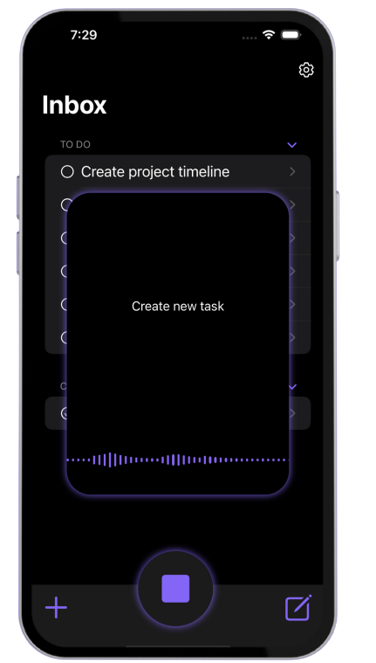
An app like Vozly is built precisely for this. Speak your tasks, your plans, your priorities — and Vozly captures, transcribes, and organizes them instantly. No typing, no opening a calendar, no fighting with a complicated system. Just your voice, your intentions, and a clear picture of what actually matters today.
With that in mind, here are six strategies that combine voice capture with proactive productivity habits to help you stop reacting and start leading your own day.
6 Proactive Productivity Strategies You Can Start Today
1. The Proactive Productivity Morning Declaration
The single most effective thing you can do for proactive productivity is to make a decision before your reactive forces kick in. Before you open your email. Before you check Slack. Before you look at anyone else’s agenda.
Every morning, before you do anything else, open Vozly and speak your three most important tasks for the day. Not your entire to-do list — just three. The three things that, if completed, would make today a genuine success regardless of everything else that happens.
Say them out loud. Be specific. “Finish the first draft of the Q3 report” is a task. “Work on the report” is a wish.
This two-minute ritual does something profound to your brain. By vocalizing your priorities before the reactive noise begins, you’re essentially programming your focus for the day. Psychologists call this implementation intention — and studies consistently show it dramatically increases follow-through compared to vague goal-setting. When you’ve already decided what matters, every interruption that arrives has to compete with a declared intention rather than an empty slot.
This is the foundation of proactive productivity. Everything else builds on it.
2. The Proactive Productivity Weekly Capture
Reactive mode isn’t just a daily problem — it’s a weekly one too. Most people begin their week by looking at what’s arrived in their inbox over the weekend and letting that dictate their priorities. That’s reactive planning, and it guarantees you’ll spend the week serving other people’s agendas.
Proactive productivity requires a weekly planning ritual that happens on your schedule, not everyone else’s. Every Sunday evening or Monday morning — before the week gets away from you — open Vozly and do a full voice capture of everything on your mind.
Speak out every project, every commitment, every errand, every half-formed idea. Don’t filter. Don’t prioritize yet. Just get it all out of your head and into the app. This is your Second Brain practice in action — offloading the mental weight of holding everything so that your brain can focus on actually thinking rather than just storing.
Once it’s all captured, do a second voice note where you pick your three big priorities for the week. These become your anchors. Whatever reactive demands the week throws at you, you already know what you’ve committed to. You can evaluate interruptions against a declared plan rather than an empty mental slate.
This kind of weekly proactive productivity ritual is one of the highest-leverage habits you can build. It takes under 15 minutes. It pays back hours.
3. Proactive Productivity Through Task Batching by Voice
One of the sneakiest destroyers of proactive productivity is task-switching — bouncing between completely different types of work throughout the day. You write for 10 minutes, then answer an email, then jump to a spreadsheet, then back to writing. Each switch burns cognitive fuel and costs you that recovery time we mentioned earlier.
The antidote is task batching: grouping similar types of work into dedicated blocks and doing them all at once. Communication tasks together. Deep thinking tasks together. Admin tasks together. This is a well-established productivity principle, but the missing piece for most people is the capture step — actually writing down which tasks belong to which batch before the day begins.
Voice makes this effortless. The night before or first thing in the morning, open Vozly and sort your tasks as you speak them: “Email batch: reply to the three messages from yesterday, send the project update to Sarah, follow up with the client.” Then: “Deep work batch: write the product brief, review the budget proposal.” Then: “Admin batch: expense report, schedule next week’s calls.”
By using your voice to batch proactively, you’ve done two things at once: you’ve captured everything that needs doing, and you’ve already made the sequencing decisions that will prevent reactive task-switching throughout the day. That’s proactive productivity working at its most efficient.
4. Proactive Productivity and the “Closed Loop” Voice Check-In
One of the most uncomfortable truths about proactive productivity is that it breaks down at the end of the day — not the beginning. You start the morning with clear intentions, but by 4 PM, reactive forces have rerouted your attention and half your planned tasks are still sitting untouched. Sound familiar?
The fix is a daily closed-loop check-in. Every day, before you finish work, open Vozly and do a short voice review. Speak through what you actually completed, what shifted, and what needs to carry forward to tomorrow. This takes less than three minutes.
This habit does several important things for your proactive productivity practice. First, it closes the open loops from today so they’re not quietly draining your mental energy tonight. Research on the Zeigarnik Effect shows that uncompleted tasks stay active in working memory, creating that background hum of anxiety that makes it hard to truly switch off after work. Speaking them into Vozly transfers them out of your brain and into a reliable system.
Second, it gives you the raw material for tomorrow morning’s declaration. Because you already know what carried over and what’s genuinely urgent, your morning three-task declaration becomes faster and more accurate.
Third — and this is underrated — it builds self-awareness over time. After a few weeks of daily voice check-ins, you’ll start to notice patterns. Which days do you consistently get derailed? Which types of tasks keep slipping? That insight is the foundation for making lasting changes to how you work.
5. Proactive Productivity with Voice-Based Time Blocking
Time blocking — assigning specific tasks to specific time slots on your calendar — is one of the most powerful proactive productivity techniques ever studied. Cal Newport, author of Deep Work, estimates that a 40-hour time-blocked week produces the same output as a 60-plus hour unstructured one. The reason is simple: when you decide in advance what gets your attention and when, you eliminate the constant low-grade decision-making that drains energy throughout the day.
The problem is that most people find time blocking tedious to set up. Opening a calendar app, creating events, writing descriptions — it’s enough friction to make the whole system feel more like bureaucracy than productivity.
Voice removes that friction entirely. At the start of each day or the evening before, open Vozly and narrate your time blocks out loud: “9 to 11 AM — deep work block, write the presentation. 11 to 11:30 — email and Slack. Midday — lunch, walk, proper break. 1 to 3 PM — client calls. 3 to 4 PM — admin batch. 4 to 4:15 — closed-loop check-in.”
Speak it, Vozly captures it, and you have a complete blueprint for the day in under 90 seconds. You can then transfer this to your calendar if you prefer a visual reference, but many Vozly users find the voice note itself is enough — they replay it in the morning as a quick briefing to themselves.
This voice-first approach to time blocking brings proactive productivity within reach for people who’ve always found structured scheduling too cumbersome to maintain.
6. The Proactive Productivity Weekly Review
The sixth strategy is the one that makes all the others sustainable long-term: a weekly voice review. Not just a planning session — a genuine reflection on how the week actually went and what you want to do differently next week.
Every Friday — which, not coincidentally, is when this blog goes out — take 10 minutes with Vozly and speak through three simple questions:
What worked this week? Which proactive productivity habits paid off? Which planning decisions saved you from reactive chaos?
What didn’t work? Where did reactive mode win? What patterns kept pulling you off track?
What will I do differently next week? One or two specific changes, spoken out loud, become commitments in a way that silent mental notes never do.
This Friday review ritual is one of the most underused tools in personal productivity. It transforms the work week from something that happens to you into something you’re actively designing and improving. It’s the difference between doing productivity and practicing it — which is the mindset shift that separates people who read about proactive productivityfrom people who actually live it.
And because it’s done entirely by voice, the barrier is low enough that you’ll actually do it — even on a Friday afternoon when every other part of your brain is already thinking about the weekend.
Who Especially Benefits from Proactive Productivity?
The honest answer is that practically everyone benefits. But a few groups tend to see the most dramatic transformations.
Remote and hybrid workers are particularly vulnerable to reactive mode. Without the natural structure of an office environment, the day can easily collapse into an endless sequence of Slack messages and video calls. As research from Fast Company shows, flexibility without structure is one of the biggest productivity challenges in 2026’s workplace. Proactive productivity habits provide the structure that hybrid work often lacks.
Freelancers and solopreneurs face a unique version of this challenge. When you’re accountable to multiple clients simultaneously, reactive mode can become total — your entire day consumed by whoever is loudest. A voice-powered planning practice creates a protected container for your own work within the client demands.
People with ADHD or executive function challenges often find that reactive mode is essentially the default setting of their brain — it’s extremely hard to initiate proactive planning when the pull toward stimulus-driven behavior is strong. Voice capture dramatically lowers the initiation cost of planning, making proactive productivity habits more accessible than written planning systems.
High-performers who feel stuck — people who are already working hard but can’t understand why their most important projects never seem to move — almost always turn out to be living in reactive mode. They’re busy, but they’re not being strategic. Proactive productivity is the reframe that unlocks the next level.
Getting Started: Your First Week of Proactive Productivity
Here’s a simple one-week plan to get started without overwhelming yourself.
Monday: Do only Strategy 1. Before you open anything else in the morning, speak your three most important tasks into Vozly. That’s it. Do it every morning this week.
Wednesday: Add Strategy 4. At the end of your workday, do a 3-minute voice check-in. What got done? What’s carrying forward?
Friday: Do Strategy 6. Take 10 minutes with Vozly and speak through what worked, what didn’t, and one thing you’ll do differently next week.
Just those three habits, practiced consistently, will transform how your week feels within days. Once they’re established, layer in the weekly capture (Strategy 2), task batching (Strategy 3), and voice-based time blocking (Strategy 5) at whatever pace feels sustainable.
Proactive productivity isn’t a system you install and forget. It’s a practice you develop over time. The goal isn’t a perfect week — it’s a slightly more intentional week than the last one.
Download Vozly and start with Monday’s declaration. Three tasks. Out loud. Before the inbox opens. Everything else will follow.
Final Thoughts on Proactive Productivity
Here’s the thing nobody tells you about proactive productivity: it doesn’t require more willpower. It doesn’t require more discipline. It doesn’t require you to become a different kind of person.
It just requires a small decision, made early, before the reactive forces of the day take over. Speak your priorities. Commit to them out loud. Return to them when the inevitable interruptions arrive.
That’s it. That’s the whole practice.
Your attention is the most valuable resource you have. Every notification, ping, and “quick question” is a bid for that resource. Proactive productivity is simply the habit of deciding in advance who gets it — and making sure that most of the time, the answer is you and your most meaningful work.
Start small. Start with your voice. Start today.

What is proactive productivity?
Proactive productivity is the practice of intentionally planning and prioritizing your work in advance, rather than simply responding to whatever demands arrive throughout the day. Instead of letting your inbox, notifications, and other people’s urgencies dictate your schedule, proactive productivity means you decide first — what matters, in what order, and when — and then protect those decisions from reactive interference.
How is proactive productivity different from regular time management?
Traditional time management focuses on organizing and scheduling tasks. Proactive productivity goes a step further by addressing the mindset behind the schedule — specifically, the shift from reactive (responding to what arrives) to intentional (deciding what matters in advance). You can have a perfectly organized calendar and still live in reactive mode if your priorities are constantly being overridden by external demands.
Why do so many people struggle with proactive productivity?
The main barrier is friction. Planning in advance requires more effort than reacting, especially when you’re already overwhelmed. Most people default to reactive mode not because they lack ambition, but because the tools and habits for proactive planning feel too cumbersome. Voice-first apps like Vozly reduce this friction dramatically by making the capture and planning process as fast as speaking a sentence.
How long does it take to build proactive productivity habits?
Research on habit formation suggests that most behavioral habits become automatic within 60 to 90 days of consistent practice. But you don’t need to wait that long to feel the benefits — most people notice a meaningful difference in how their day feels within the first week of doing a daily morning declaration and evening check-in.
Can proactive productivity work if my job is highly reactive by nature?
Absolutely. Even in roles that are inherently reactive — customer support, management, emergency services — there’s always a portion of your day that you can proactively protect. The goal isn’t to eliminate reactive work entirely, but to carve out intentional time for your most important tasks before reactive demands consume everything. Even 60 to 90 minutes of protected proactive time per day can be transformative.
Is proactive productivity the same as deep work?
They’re closely related but not identical. Deep work, as defined by Cal Newport, refers to cognitively demanding work performed in a state of distraction-free concentration. Proactive productivity is the broader practice of intentional planning that makes deep work possible. You need proactive habits to protect and schedule your deep work blocks — otherwise they get crowded out by reactive demands before they ever happen.