
Body doubling is one of those productivity concepts that sounds almost too simple to work — and yet, once you understand what’s actually happening inside your brain when you use it, you’ll wonder how you ever got anything done without it.
If you’ve ever noticed that you magically become productive the moment a friend sits down to work next to you, or that you get more done in a coffee shop than alone at your desk, you’ve already experienced body doubling firsthand.
And here’s the exciting part: you don’t need another person in the room to get the same effect. Your voice — and a smart app like Vozly — can do the job just as well.In this post, we’re going to break down exactly what body doubling is, why it works, and five concrete ways you can use voice-powered task capture to give yourself that same focus boost every single day.
What Is Body Doubling, Exactly?
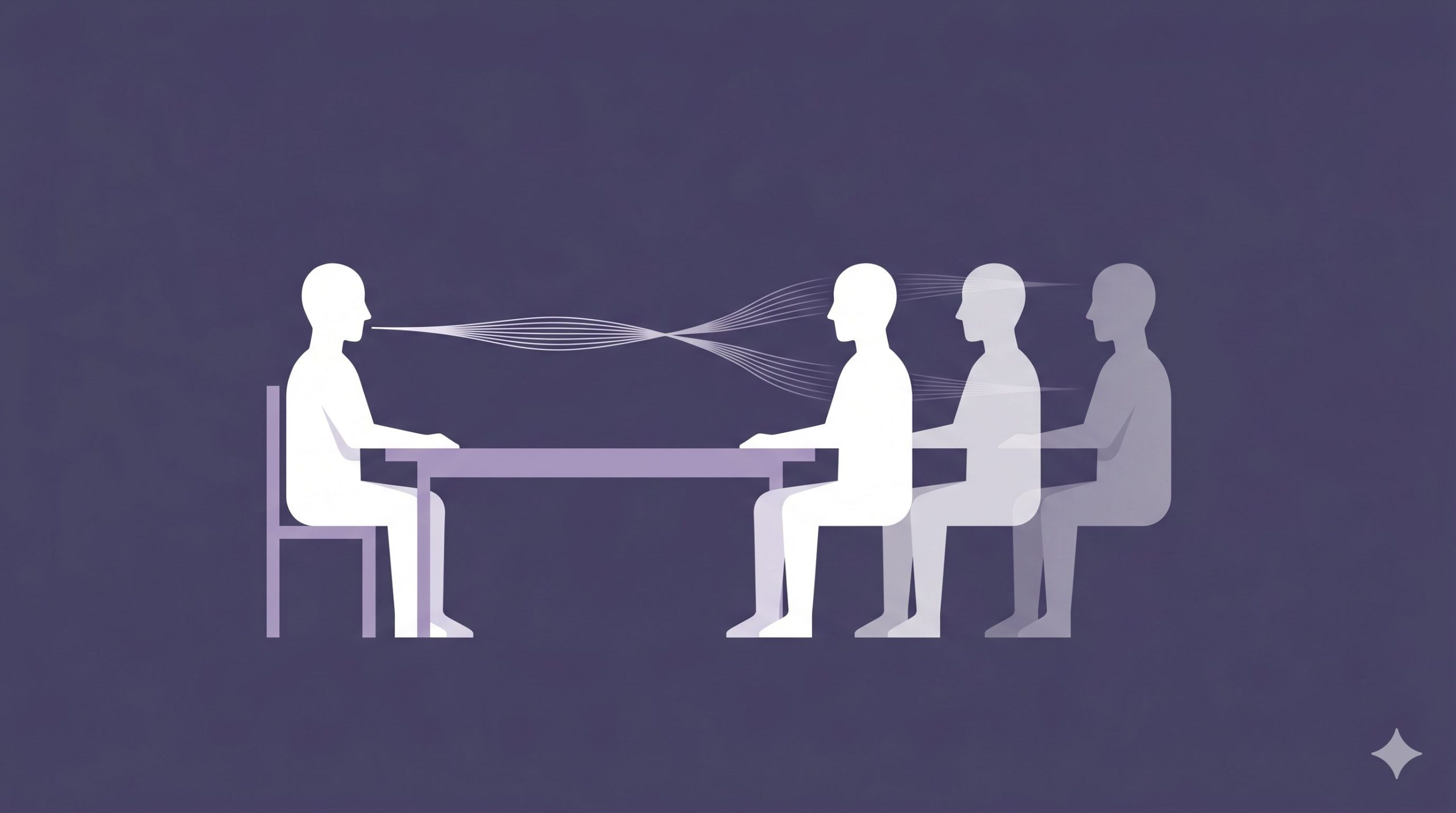
At its core, body doubling simply means working in the presence of another person to help you stay on task. The other person doesn’t coach you, check on you, or even talk to you. They just exist nearby, doing their own thing. And somehow, that’s enough to get your brain to cooperate.
The term comes from the ADHD community, where it’s been a trusted strategy for decades. But researchers and productivity experts have increasingly found that body doubling isn’t just for people with ADHD — it benefits pretty much everyone. A study involving over 100 participants at a virtual co-working platform found that 96% reported an above-average positive impact on focus, and 94% on overall productivity when using body doubling techniques.
So why does simply having someone nearby make such a difference? It comes down to a few fascinating psychological mechanisms.
The Science Behind Why Body Doubling Works
Understanding the why behind body doubling makes it easier to replicate the effect in creative ways — including through your own voice.
Social facilitation is the phenomenon where the mere presence of others improves our performance on tasks. Psychologist Robert Zajonc first documented this in 1965, finding that people perform better on well-learned tasks when observed. When you’re working alongside someone, even silently, your brain shifts into a slightly more alert, socially-aware state that naturally improves focus.
Then there’s the Zeigarnik Effect — the brain’s tendency to keep nagging you about unfinished, unanchored tasks. Every to-do item floating around in your head is an open mental loop, quietly burning cognitive energy. When you close those loops by committing them to a system out loud, your brain can finally relax. This is why Mental Overload feels so much worse when you haven’t written anything down.
Finally, activation energy plays a big role. Body doubling reduces the psychological activation energy required to start a task. Starting is always the hardest part. When someone else is already working, the inertia of productivity becomes contagious and the cost of starting drops dramatically.
Now here’s where it gets really interesting for Vozly users: you can engineer all three of these mechanisms yourself, using your own voice as the trigger.
Why Your Voice Is the Ultimate Body Doubling Hack
When you speak a task out loud, something neurologically significant happens. You’re not just creating a note — you’re making a commitment. You’re externalizing a thought that was previously swirling around invisibly in your head and giving it a concrete, real-world form. That act of vocalization mimics the psychological effect of having a witness.
Think about it this way: when you tell someone “I’m going to finish this report by 3 PM,” you’re far more likely to actually do it than if you just thought it quietly to yourself. The spoken word carries social weight, even when you’re the only one in the room.
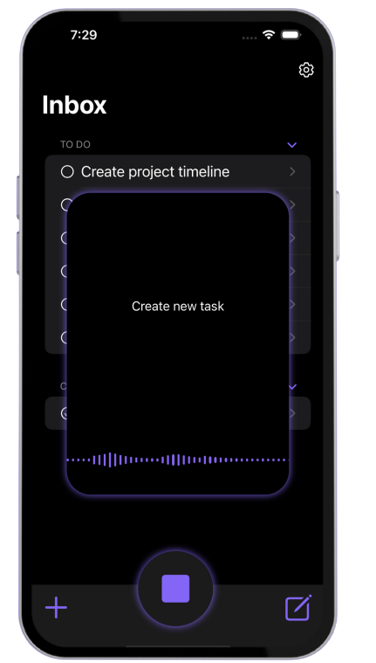
This is the hidden superpower of a voice-first to-do list app like Vozly. Every time you speak a task into the app, you’re performing a miniature version of body doubling on yourself. You’re externalizing the commitment, creating an auditory anchor, and dramatically lowering the psychological cost of actually starting the work.
Let’s break down exactly how to use this to your advantage with five specific strategies.
5 Body Doubling Techniques You Can Do with Your Voice
1. The Body Doubling Brain Dump: Speak Before You Start
Before you begin any work session — whether it’s a two-hour deep work block or a quick 20-minute admin sprint — open Vozly and do a fast voice brain dump. Speak every task, worry, errand, and idea that’s floating in your head right now, no filtering allowed.
This technique works because it replicates what happens in a body doubling session when someone asks “what are you working on today?” That simple act of stating your intentions out loud activates the same social commitment mechanism. You’ve declared your plan to something outside of your own head, and your brain takes that seriously.
Don’t worry about organizing as you go. Just speak freely for 60 to 90 seconds. Vozly transcribes everything and stores it safely, which means your brain can immediately let go of the burden of holding all those thoughts. That cognitive release is exactly what you need to drop into focused, uninterrupted work.
Think of it as your personal Second Brain warm-up ritual — except instead of typing into a database, you’re just talking to your phone.
2. Voice Accountability: Record Your Daily Intentions Out Loud
One of the most powerful elements of body doubling is the sense of being “watched” — even passively. You can replicate this feeling by recording a short voice intention at the start of each day or work session. Something as simple as:
“Today I’m going to finish the client proposal draft, respond to the three emails in my inbox, and take a 20-minute walk at lunch.”
Speak it into Vozly as a voice memo. It becomes an auditory record of what you said you’d do. Later in the day, when your focus starts to drift or you’re tempted to procrastinate, you can actually play that voice note back and hear your own commitment.
Research on implementation intentions — the psychological term for “if/when/then” planning — shows that stating specific plans in advance significantly increases follow-through. When you add the layer of your own voice, you’re tapping into both the implementation intentions effect and the social accountability effect of body doublingsimultaneously.
This is especially powerful for people who struggle with task initiation. Instead of staring at a blank to-do list every morning, you have your own voice waiting to remind you exactly what you decided mattered today.
3. The Micro-Task Voice Check-In for Body Doubling Focus
Traditional body doubling sessions often work in timed intervals. You sit down with your partner, you each state what you’re working on, you set a timer, you work in silence, and then you briefly check in at the end of the block. This structure is incredibly effective because it creates regular, low-stakes accountability moments.
You can replicate this rhythm entirely on your own with Vozly. Here’s how:
At the start of a work interval — say, 25 minutes — speak your micro-goal into the app: “For the next 25 minutes I’m going to write the introduction of this article.” Set your timer. When it goes off, open Vozly again and speak a brief check-in: “Done, moving on to the body section.” Or: “Got distracted, going to try again for 15 minutes.”
The act of checking in out loud — even to an app — creates the accountability loop that makes body doubling so effective. You’re not hiding from yourself. You’re narrating your own process, which keeps you honest and surprisingly motivated.
This approach pairs perfectly with the Pomodoro Technique and similar time-boxing methods. The difference is that with voice, the check-in takes three seconds instead of three minutes, so you actually do it.
4. Body Doubling for Boring Tasks: The Running Commentary
Let’s be honest — not every task on your list is exciting. Tax prep, data entry, clearing your email inbox, sorting files. These are the tasks where focus evaporates fastest and where body doubling historically makes the biggest difference. The presence of another person provides just enough ambient social pressure to keep you from drifting.
Here’s a voice-first version: as you work through a tedious task, narrate what you’re doing into short voice memos or tasks in Vozly. “Done with the first five invoices.” “Archived January emails.” “Three items left in the inbox.”
This running commentary keeps your brain engaged at a level slightly above pure autopilot. It also gives you a satisfying, concrete record of your progress — something that’s genuinely motivating when you’re doing work that feels invisible.
Think of it as the solo version of those “study with me” YouTube videos that have exploded in popularity over the last few years. Millions of people watch strangers silently study on camera because it replicates the focus-boosting effect of body doubling. Your voice narration does the same job from the inside out.
5. The Sunday Voice Reset: Plan Your Week as Your Own Accountability Partner
The best way to use body doubling throughout the week is to front-load your accountability at the start. A weekly planning ritual, done entirely through voice, sets the tone for everything that follows.
Every Sunday — or whatever day works for your schedule — open Vozly and speak through your upcoming week. Voice out your three biggest priorities, any important deadlines, commitments you’ve made to others, and anything you want to protect time for (rest, exercise, meaningful social time).
This is your weekly body doubling session with your future self. By speaking these intentions out loud now, you’re creating an auditory commitment that echoes through the whole week. Whenever you feel adrift, you can replay that voice planning session and instantly reconnect with what you said actually mattered.
This also connects beautifully with the idea of a Sunday Reset — the practice of intentionally setting up the week ahead so that Monday morning doesn’t feel like an ambush. Adding voice to that ritual makes it significantly more powerful than typing or writing alone.
Who Benefits Most from Voice-Powered Body Doubling?
The honest answer is: almost everyone. But there are a few groups who tend to see the most dramatic results.
People with ADHD have used body doubling as a core productivity strategy for years, and the evidence is compelling. Voice-first task management extends this support into the moments between formal body doubling sessions — during solo work, commutes, or late nights when no partner is available.
Remote workers and freelancers often lose the passive accountability structure that an office provides. When nobody can see whether you’re working or scrolling social media, motivation can plummet. A voice-powered routine creates artificial structure that replaces some of what the office naturally provided.
Creative professionals — writers, designers, musicians, anyone whose work requires sustained concentration — frequently struggle with the gap between having an idea and executing it. The resistance to starting is enormous. Voice capture short-circuits that resistance because speaking is so much faster and lower-friction than typing.
Students dealing with heavy reading loads, dissertation writing, or exam prep can use voice body doubling techniques to build study rituals that actually stick, even when studying alone.
And honestly, even if you don’t fall into any of those groups — if you’re a person who sometimes finds it hard to stay focused, which is to say almost every human alive in 2026 — these techniques work.
Getting Started: Your First Voice Body Doubling Session
If you’ve never tried this before, here’s the simplest possible way to start today:
Download Vozly and open it right now. Speak the three most important things you need to do today. Just say them out loud. Don’t type anything, don’t organize anything — just speak.
That’s your first body doubling session. You’ve just externalized your commitments, closed three mental loops, and lowered the activation energy for all three tasks simultaneously. You can do the rest later. Start there.
As you build the habit, layer in the other techniques from this post: the daily voice intention, the micro-task check-ins, the running commentary on boring work, and the weekly Sunday planning session. Each one adds another layer of the accountability and focus that body doubling provides — without requiring you to schedule a co-working session, hire a focus partner, or leave your house.
Your voice is always with you. And with Vozly, that’s all you need.
Final Thoughts on Body Doubling with Your Voice
Body doubling isn’t magic. It’s psychology — specifically, it’s the intersection of social facilitation, commitment devices, and activation energy reduction working together to make starting and staying on task dramatically easier. The good news is that once you understand the mechanics, you can engineer those same effects through your own behavior.
Speaking your tasks, intentions, and check-ins out loud into an app like Vozly replicates the core neurological benefits of having a silent work partner beside you. It’s a small habit with an outsized impact on your ability to focus, follow through, and actually get things done — even when life is noisy, unpredictable, and full of distractions.
So the next time you’re staring at your to-do list wondering how to start, don’t type. Don’t scroll. Just open Vozly and speak. Your focus will follow.

What is body doubling and how does it work?
Body doubling is a productivity technique where you work in the presence of another person — physically or virtually — to help you stay focused and on task. The other person doesn’t need to help you or even interact with you. Their mere presence activates a neurological state of mild social awareness that reduces procrastination and lowers the psychological resistance to starting work.
Does body doubling work for people who don’t have ADHD?
Yes. While body doubling originated as a strategy within the ADHD community, research and anecdotal evidence consistently show it benefits neurotypical people too. Anyone who struggles with distraction, task initiation, or procrastination can experience a meaningful boost in focus from body doubling techniques.
Can I do body doubling alone?
Absolutely — and that’s exactly what this post is about. By speaking your tasks, intentions, and check-ins out loud into a voice app like Vozly, you replicate the core psychological mechanisms of body doubling without needing another person present. Your own voice acts as an external commitment device that triggers the same focus response.
How is body doubling different from accountability partnerships?
Accountability partnerships involve active check-ins, goal sharing, and mutual feedback. Body doubling is entirely passive — no conversation, no reporting, no performance pressure. You simply work alongside someone (or simulate that presence through voice), and the focus benefit happens automatically in the background.
How often should I use body doubling techniques?
As often as you need them. Many people build a short voice check-in into the start of every work session, which takes less than two minutes and sets a focused tone for the entire block. Others use it specifically for tasks they tend to avoid. There’s no ceiling — the more consistently you use it, the more automatic the focus response becomes.