


SWOT Analysis might be the most borrowed tool in the history of self-improvement — and also the most misused. Originally designed for boardrooms, it has quietly become one of the most powerful frameworks for personal development, career decisions, and life planning. The problem? Most people treat it like a worksheet. They fill in four boxes, nod to themselves, and close the laptop. Nothing changes. The lists sit there, collecting digital dust, while the insights they were supposed to spark never quite turn into action.
In this post, we’re going to change that. You’ll learn what a SWOT Analysis actually is, why it works so well when applied to yourself rather than a spreadsheet, and five concrete ways to use it — including one approach that most guides never mention: capturing your SWOT insights by voice, in real time, before the clarity fades.
What Is a SWOT Analysis — and Why Does It Work for People?
SWOT Analysis stands for Strengths, Weaknesses, Opportunities, and Threats. The framework was developed by Albert Humphrey at the Stanford Research Institute in the 1960s as a strategic planning tool for businesses. The logic was simple: before you commit resources to a direction, map what’s working for you, what’s working against you, what the environment is offering, and what it might take away.
That same logic applies perfectly to a person making decisions about their career, habits, or goals.
The four letters split along two axes. One axis is origin — internal versus external. The other is effect — helpful versus harmful. That’s it. That’s the whole structure. But the power is in what you do with the intersections.
Here’s the breakdown:
- Strengths — internal factors that give you an advantage. Skills, habits, experiences, relationships.
- Weaknesses — internal factors that hold you back. Gaps, blind spots, patterns you keep repeating.
- Opportunities — external factors you could leverage. Trends, changes, openings in your industry or life.
- Threats — external factors that could work against you. Competition, economic shifts, skills becoming obsolete.
Unlike many self-assessment tools, SWOT forces you to look beyond your own capabilities. The Opportunities and Threats quadrants push you to consider the wider context — industry trends, organizational changes, market shifts, and competitive dynamics. That external perspective is what turns a personal inventory into a genuine strategy.
The reason most personal SWOT Analysis sessions fail isn’t the framework — it’s the follow-through. People stop at the list. The real value starts when you cross the quadrants and ask: what does a strength plus an opportunity actually require me to do this week?
Why Most SWOT Analyses Never Lead to Action
Before we get into the five ways to make yours work, it’s worth understanding why so many don’t.
Teams weaken a SWOT analysis when they treat it as a documentation task rather than a strategic planning tool. The same is true for individuals. You fill in the boxes because it feels productive. But productivity theater — the act of organizing thoughts without acting on them — is one of the sneakiest forms of procrastination there is.
There are three specific reasons a personal SWOT Analysis stalls:
First, the insights evaporate. You have a moment of genuine clarity — you realize your biggest weakness is how you react under pressure, or that there’s a real opportunity in the market shift you’ve been noticing. And then life resumes. By tomorrow, that clarity is gone. This is why capturing insights immediately matters more than most people realize.
Second, the quadrants stay separate. A list of strengths and a list of threats sitting in different boxes is just information. The strategic value comes from connecting them — but most people never make that move.
Third, there’s no action attached. A SWOT that does not end in a decision was a waste of an afternoon. Harsh, but accurate.
The five approaches below are specifically designed to solve all three of these problems — and Vozly plays a central role in fixing the first one.
5 Powerful Ways to Use SWOT Analysis on Yourself
1. SWOT Analysis as a Voice Brain Dump
The most underused starting point for a SWOT Analysis is also the fastest: speak it out loud before you write anything down.
Most people approach SWOT by staring at a blank grid and trying to generate insights on command. That’s cognitively backwards. Your best self-knowledge doesn’t emerge under pressure — it surfaces during movement, in the shower, on a walk, in that strange clarity that arrives at 7 AM before the day’s noise takes over.
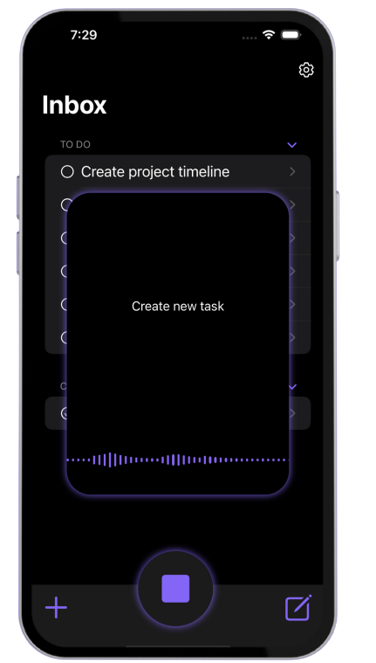
The fix is to carry a voice capture tool everywhere and speak your observations the moment they occur. Open Vozly and say: “Strength — I’m unusually good at staying calm when everyone else is panicking.” Or: “Threat — I’ve been noticing that my main skill set is increasingly being handled by AI tools.”
These raw, unfiltered observations — captured by voice in the moment — are the most honest material you’ll ever put in a SWOT Analysis. They haven’t been edited by ego. They haven’t been softened by the desire to look good on paper. They’re just true.
Once you’ve collected a week’s worth of these voice notes, you have the raw material for the most accurate SWOT of your life. No staring at blank boxes required.
2. SWOT Analysis for Career Pivots
One of the highest-leverage uses of a personal SWOT Analysis is making a career decision — whether that’s a promotion, a pivot, a side project, or a full industry change.
You are deciding where to invest your time, and time is the one budget you cannot raise. That framing alone should make you take the analysis seriously. Your career SWOT should include:
Strengths: What do people consistently come to you for? What have you built over years that most people haven’t? What combination of skills do you have that’s genuinely rare?
Weaknesses: What feedback have you received more than once? What do you quietly avoid because you know you’re not great at it? What’s the gap between how you see yourself and how your managers or peers describe you?
Opportunities: Postings requiring AI skills grew 7.5% even as total postings fell 11.3%. In SWOT terms, “learn to use AI tools in my field” is no longer a vague opportunity — it is a measurable one. Ground your opportunities in real data, not LinkedIn vibes.
Threats: Is your role category shrinking? Are people five years younger developing the same skills faster? Is the company or industry you’re in structurally contracting?
After mapping all four quadrants, the strategic move is to identify your SO combination — a Strength that maps directly to an Opportunity. That’s where your next move lives. Speak it into Vozly before you lose the thread: “My SO combination is my experience in client communication plus the growing demand for human-centered AI roles.”
That one sentence, captured before you close the laptop, becomes the seed of your next career plan.
3. SWOT Analysis for Personal Growth (Not Just Professional)
Most SWOT Analysis guides focus on career. But the framework is just as powerful — arguably more honest — when applied to who you are as a person rather than what you do at work.
A personal growth SWOT looks at your relationships, your habits, your energy patterns, your emotional responses, and the external circumstances of your life. It’s less comfortable to fill in. That’s exactly why it’s more valuable.
Some prompts that work well for this version:
Strengths: When do you feel most like yourself? What do people who love you say you bring to relationships? What have you been through that most people haven’t?
Weaknesses: To identify hidden strengths and weaknesses, you should use self-assessment techniques like journaling, feedback, and reflection. These methods help reveal blind spots that you might overlook. Ask trusted colleagues or friends for honest insights, and review past achievements and challenges. The key word is hidden. The weaknesses that are already visible to you are the easy ones. The ones worth finding are the ones your closest friends see but haven’t said out loud yet.
Opportunities: What life circumstances have recently changed that you haven’t fully capitalized on? A new city, a new relationship, a new phase of life?
Threats: What patterns in your behavior tend to show up when you’re stressed? What external pressures — financial, social, family — could destabilize your goals if you don’t plan for them?
This version of SWOT Analysis pairs naturally with a Sunday Reset practice. Set aside 30 minutes, open Vozly, and do a spoken stream-of-consciousness through all four quadrants. The spoken format removes the self-censorship that written journaling can encourage.
4. Cross-Quadrant SWOT Analysis: Where the Real Decisions Live
This is the step that separates a useful SWOT Analysis from a decorative one — and almost no one does it.
Once you have all four quadrants populated, the strategic value comes from crossing them:
- SO (Strength + Opportunity): How can you use what you’re good at to capture what’s available? This is your growth strategy.
- WO (Weakness + Opportunity): What weaknesses do you need to fix specifically to access a particular opportunity? This is your development priority.
- ST (Strength + Threat): How can you use your strengths to mitigate or neutralize a threat? This is your defensive strategy.
- WT (Weakness + Threat): What’s the combination most likely to hurt you if you do nothing? This is your risk map.
Most people fill in the four quadrants and call it done. The cross-quadrant work is where the actual decisions emerge. And because those decisions tend to arrive suddenly — the mental click of “oh, so that’s what I need to do” — capturing them by voice the moment they surface is critical.
Open Vozly mid-analysis and speak your cross-quadrant insights as they arrive. Don’t wait until you’ve “finished” to write them down. The clarity is most precise in the moment of realization, and that moment rarely lasts long enough for a keyboard.
5. Regular SWOT Analysis: The Habit Nobody Builds
The final — and most underappreciated — approach to SWOT Analysis is making it a regular practice rather than a one-time event.
Teams weaken their analysis when they treat SWOT as a one-time exercise. Regular updates align insights with changing conditions. The same is absolutely true for individuals. Your strengths evolve. Your weaknesses shift. Opportunities appear and close. Threats emerge from directions you didn’t anticipate six months ago.
A quarterly SWOT Analysis takes about 30 to 45 minutes and dramatically improves the accuracy of your self-understanding over time. The trick is making it low-friction enough to actually do.
Here’s a rhythm that works:
Weekly: Capture SWOT observations by voice as they naturally surface — don’t try to force them. A strength you notice during a meeting, a threat you read about in the news, a weakness someone else’s feedback just illuminated.
Monthly: Do a five-minute spoken review. Open Vozly and speak through each quadrant briefly. What changed? What stayed the same? What surprised you?
Quarterly: Do the full cross-quadrant analysis. 30 to 45 minutes. Written or spoken. Extract one SO decision, one WO development priority, one ST defensive move.
This rhythm turns SWOT Analysis from a career exercise into a living self-awareness practice. And because Vozly captures your weekly observations in real time, the quarterly session is never starting from scratch — you have months of raw material waiting.
How Voice Capture Changes Everything About SWOT Analysis
Here’s the thing most SWOT Analysis guides miss: the quality of your inputs determines the quality of your outputs. And most people’s inputs are mediocre — not because they lack self-knowledge, but because they try to generate that knowledge on command, sitting at a desk, under artificial time pressure.
Your best insights about yourself don’t arrive on schedule. They come during a run, mid-conversation, lying awake at 6 AM, watching someone else handle a situation and noticing the gap between how they did it and how you would have. Those flashes of self-knowledge are the most valuable raw material for a SWOT Analysis — and they vanish within minutes if not captured.
This is exactly what Vozly is built for. Speaking a 15-second observation — “Weakness: I consistently underestimate how long deep work takes, which throws off everything else” — takes less time than unlocking your phone. But that observation, captured and stored, becomes the kind of honest input that makes a SWOT Analysis genuinely useful rather than generically true.
The gap between a SWOT Analysis that changes your life and one that fills an afternoon isn’t the framework. It’s the quality and honesty of what goes into it — and whether those insights survive long enough to become decisions.
Voice capture closes that gap. It’s the lowest-friction bridge between the moment of clarity and the moment of action. And for something as personal and honest as a self-analysis, that bridge matters more than any template or worksheet ever could.
Final Thoughts on SWOT Analysis
SWOT Analysis was never meant to be a document. It was meant to be a decision. A map of where you are, built honestly, pointed toward where you’re going, with specific next moves extracted from the intersections.
Used well — with real honesty in the inputs, cross-quadrant thinking in the analysis, and voice capture to preserve insights in real time — it becomes one of the most clarifying things you can do for yourself. Not once a year. Not when you’re job hunting. Regularly, as a practice of deliberate self-awareness.
Start today. Open Vozly, speak one true thing about your biggest current strength. Then one about your most honest current weakness. You’ve just started your SWOT Analysis — and it took less than 60 seconds.
The boxes can wait. The insights can’t.