


Remote work loneliness is the part of working from home that nobody puts in the job listing. The commute disappears — great. The open-plan office noise disappears — even better. But so does the spontaneous coffee chat. The hallway conversation that turned into a breakthrough idea. The colleague who noticed you seemed off today and asked if you were okay. The casual background hum of other humans simply existing nearby.
For millions of people, working from home has been genuinely life-changing in the best possible way. No commute means hours returned to your actual life. Flexibility means you can structure your day around how you actually think and work. The autonomy is real, and so are the productivity gains — 61% of remote workers say they are more productive at home. But the data tells a more complicated story too. According to a 2026 analysis by Chanty, 67% of fully remote employees feel lonelier over time. One in five remote workers cites loneliness as their top challenge. And loneliness costs U.S. employers roughly $154 billion per year through reduced productivity, absenteeism, and higher turnover.
This post isn’t about convincing you that remote work is bad. It’s about being honest about remote work loneliness — what it actually feels like, why it happens, and six practical things you can do about it starting today.
What Remote Work Loneliness Actually Feels Like
Remote work loneliness doesn’t usually arrive dramatically. It sneaks in slowly, which is part of what makes it so disorienting when you finally notice it.
It might start as a vague restlessness on a Tuesday afternoon — a sense that something is slightly off but you can’t name it. Then you realize you haven’t spoken out loud to another human being since Sunday. Not because nothing was wrong and not because you don’t have people in your life — but because work, which used to fill your social calendar without you even trying, no longer does.
For people who live alone, this can mean days passing in near-complete silence. Work conversations happen in text. Decisions get made without talking them through. Problems that an office colleague might have spotted in five minutes stay invisible for weeks because there’s nobody to casually notice them.
For people who work from home with family around, the experience can be different but equally isolating in its own way. There are people present, but they’re not work colleagues. You can’t exactly turn to your partner or your child and say “hey, can you help me think through this client problem?” The professional isolation is real even when the house is full. And when work challenges pile up, the family dynamic can absorb that stress in ways that create tension rather than relief.
A peer-reviewed study published in ScienceDirect in 2025 confirmed what many remote workers already know intuitively: working remotely more days per week increases the risk of anxiety and depression, and the reduced in-person interactions lead to feelings of loneliness that are difficult to compensate for through digital tools and video calls alone.
And then there’s the learning problem — the one that’s talked about least. In an office, you learn constantly without trying. You overhear how a senior colleague handles a difficult conversation. You absorb the company culture, the unwritten rules, the shortcuts and strategies that never make it into any documentation. Remote work removes this invisible curriculum entirely. You’re left to figure things out alone, which takes longer, feels harder, and can quietly erode your confidence and sense of competence over time. That erosion is its own kind of remote work loneliness — not social isolation, but intellectual isolation.
Why Remote Work Loneliness Is a Productivity Problem, Not Just a Feelings Problem
It’s tempting to treat remote work loneliness as a personal issue — something to manage privately, outside of work, in your own time. That framing is both common and deeply unhelpful.
Loneliness is not just uncomfortable. It is cognitively expensive. Research consistently shows that lonely workers perform worse, make more errors, struggle to concentrate, and are significantly more likely to disengage from their work over time. The burnout-loneliness connection is particularly dangerous: loneliness contributes to burnout through emotional exhaustion, and burnout then contributes to deeper loneliness by draining the energy needed for social connection. Once you’re in that spiral, it’s very hard to climb out through willpower alone.
55% of remote employees say it is hard to feel connected to coworkers. 51% feel that their relationships with colleagues outside their immediate team have weakened. 43% feel disconnected from their organization entirely. These aren’t soft, subjective feelings — they translate directly into the quality, creativity, and sustainability of the work these people produce.
If you’re experiencing remote work loneliness, your work is already being affected. Not because you’re weak or undisciplined — but because humans are wired for social contact in ways that affect cognition, motivation, and performance at the neurological level. Addressing loneliness isn’t a distraction from productivity. It is productivity work.
6 Honest Ways to Combat Remote Work Loneliness
1. Build a Social Architecture for Your Week — Before Remote Work Loneliness Builds It for You
The most important thing to understand about remote work loneliness is that it doesn’t respond well to reactive solutions. You can’t wait until you feel desperately isolated and then try to fix it. By that point, the inertia of isolation has already set in, and reaching out feels much harder than it would have a week earlier.
The solution is proactive social architecture — deliberately designing your week to include social contact before the absence of it starts to feel normal.
This means scheduling specific social touchpoints in your calendar and treating them with the same seriousness as client meetings or project deadlines. A weekly call with a friend or former colleague. A monthly virtual coffee with someone in your industry. A coworking session — in a café, a library, or a shared workspace — on a specific day of the week. These aren’t luxuries. For remote workers, they are structural necessities.
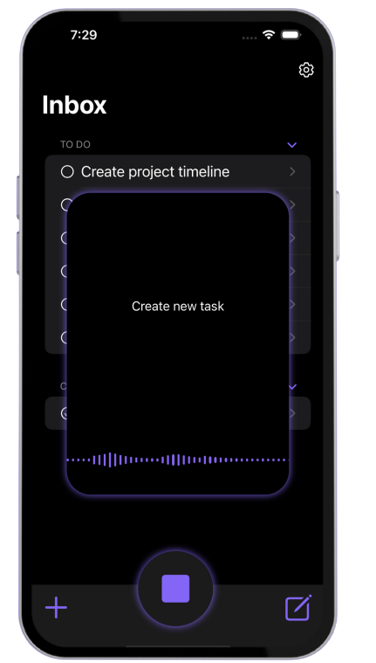
Start by opening Vozly and speaking a simple voice note: “This week I’m going to reach out to one person I haven’t spoken to in a while.” That’s it. One person. Speak it out loud. The act of voicing a social intention — rather than just thinking it — dramatically increases the likelihood of following through. Your brain hears the commitment and treats it differently.
Build from there. Within a few weeks, you’ll have a social rhythm that feels natural rather than forced — and remote work loneliness will have less room to settle in.
2. Replace the Missing Water Cooler with Intentional Check-Ins
One of the most underappreciated losses in remote work is what researchers call “weak tie” interactions — the brief, casual exchanges with acquaintances and colleagues that feel trivial but provide substantial psychological nourishment. The person you nod to every morning. The colleague you chat with while waiting for the coffee machine. The quick “how was your weekend?” before a meeting starts.
These interactions aren’t deep. That’s precisely what makes them valuable. They provide low-effort social contact throughout the day that adds up to a feeling of being part of something — of existing in a world that includes other people who are aware of you.
Remote work removes almost all of these interactions. Video calls replace them with something more formal and deliberate, which is socially expensive in a different way. The result is that many remote workers experience a social caloric deficit — they’re technically communicating, but not getting the nourishment that casual, low-stakes human contact provides.
The practical fix for remote work loneliness here is to create intentional micro-interactions to replace what used to happen organically. Send a genuine “how are you doing?” message to one colleague per day — not about work, just about them. Join or start a non-work chat channel with your team. Schedule five-minute virtual coffees that are explicitly agenda-free.
Use Vozly to capture these small social intentions before they get swept away by the task list. Speak “check in with [name] this afternoon — not about the project, just to say hello” into the app as a reminder. The contact itself takes two minutes. The effect on your sense of connection is disproportionate.
3. Turn Remote Work Loneliness into a Learning Opportunity
Here’s a reframe that doesn’t erase the genuine difficulty of remote work loneliness but does give it a more useful shape: the learning deficit that comes with remote work is real, but it’s also the most actionable part of the problem.
In an office, learning is passive and accidental. You absorb things without trying. Remote work requires you to be intentional and active about your own development — which is harder, but also gives you far more control over what you actually learn and how fast.
The strategy is to replace the invisible office curriculum with a visible, self-designed one. This means identifying one specific skill, concept, or area of knowledge per month that you want to develop and giving it structured attention. Not a vague resolution to “learn more” — a specific commitment: this month, I’m going to understand how to use AI tools in my workflow. This month, I’m going to get better at presenting data. This month, I’m going to read one book about something I don’t know enough about.
Speak this monthly learning intention into Vozly at the start of each month. Capture the specific resources you’re going to use. Check in with yourself mid-month via a quick voice note: how’s it going? What have you learned so far? This practice transforms remote work loneliness from passive isolation into active development — and the growing sense of competence it produces is one of the most reliable antidotes to the motivational erosion that remote isolation causes.
4. Create Physical Boundaries That Remote Work Loneliness Can’t Cross
One of the less obvious contributors to remote work loneliness is the collapse of spatial boundaries. When you work from home, the place where you rest, eat, relax, and exist as a human being outside of work becomes permanently contaminated by work. Your bedroom is also your office. Your living room is also your meeting room. There is no commute to serve as a transition — no physical threshold you cross that signals “work is over, life begins.”
This spatial collapse makes it very difficult to mentally disconnect from work, which keeps you in a low-grade state of always-on professional mode — even when you’re technically off the clock. Paradoxically, this doesn’t reduce loneliness. It amplifies it, because you’re never fully in your personal life either. You’re caught in a permanent in-between state that belongs entirely to neither.
The practical intervention is to create physical boundaries — however modest — that define where work happens and where it doesn’t. A dedicated desk, even in a corner. A specific chair that is only for work. A room you leave at a consistent time. The physical signal matters neurologically: your brain uses spatial cues to regulate mental states, and the clearer those cues are, the better it can transition between focused work mode and genuine recovery mode.
At the end of each workday, use Vozly to close the loop. Speak a 60-second voice check-in: what did you accomplish today, what’s carrying over to tomorrow, and what are you leaving behind. This spoken transition creates a psychological equivalent of the commute home — a moment of conscious closure that remote work otherwise removes entirely. It’s one of the most effective emotional regulation practices available to remote workers, and it takes less than two minutes.
5. Address Remote Work Loneliness with a Voice Journaling Practice
This might be the most underused tool available to remote workers dealing with isolation — and also the one with the most immediate impact on both loneliness and motivation.
Voice journaling is exactly what it sounds like: speaking your thoughts out loud rather than writing them down. For remote workers, this practice does something that text journaling can’t quite replicate — it creates the experience of expressing yourself to someone, even when no one is physically present. The act of speaking produces a different cognitive and emotional processing state than writing. It’s more dynamic, less edited, and more closely approximates the experience of talking things through with another person.
Research shows that verbalizing emotional experiences activates the prefrontal cortex and reduces amygdala activity — meaning speaking your concerns, frustrations, and observations out loud literally calms your nervous system in a way that staying in your own head doesn’t. When remote work loneliness is feeding on unexpressed thoughts and unshared observations, voice journaling breaks the cycle by externalizing them.
Open Vozly and try this: at the end of each workday, spend two minutes speaking freely — what went well, what was hard, what you noticed, what you’re thinking about. Don’t structure it. Don’t edit it. Just speak. Vozly captures and transcribes everything, so nothing is lost. And over time, reviewing these voice notes gives you something that isolated remote work rarely provides: a visible record of your own progress, your own thinking, your own development — which is its own powerful antidote to the invisibility that remote work loneliness creates.
6. Build a Remote Work Loneliness Emergency Kit for the Hard Days
Every remote worker has them — days when the isolation feels acute rather than manageable. When the silence feels oppressive rather than peaceful. When you realize mid-afternoon that the only conversation you’ve had today was with the Deliveroo app. These days are real, they’re predictable, and they’re much easier to navigate when you’ve prepared for them in advance rather than trying to improvise a response in the middle of them.
A remote work loneliness emergency kit is simply a pre-made collection of specific actions you know work for you — things that reliably shift your state, restore a sense of connection, and break the isolation spiral before it goes too deep.
Your kit might include: the name of one person you can call without needing a reason. A café or coworking space you can go to within 30 minutes. A podcast or audiobook that makes you feel accompanied. A physical activity you can do immediately. A voice note you’ve pre-recorded on a better day, reminding your future self what matters and why the hard days are temporary.
Speak your emergency kit into Vozly right now, while you’re reading this and feeling relatively okay. Name your go-to person. Name your go-to place. Name your go-to activity. Store it as a voice note labeled “for the hard days.” When the hard day arrives — and it will — you won’t have to think. You’ll just have to play the note and follow the instructions you gave yourself.
This is proactive productivity applied to emotional wellbeing. And for remote workers navigating remote work loneliness, it’s one of the most compassionate things you can do for yourself.
A Note for People Who Work from Home with Family
Remote work loneliness when you have family around is its own distinct experience — and it deserves to be named separately, because it can feel particularly confusing. You’re not alone in any literal sense. There are people around. And yet the specific kind of connection that professional life used to provide — intellectual peers, shared goals, organizational belonging — is absent.
This gap between social presence and professional connection can create a strange, unnameable dissatisfaction. You have company, but not the right kind of company for what you’re missing. And when work stress peaks, the people around you — who love you but don’t share your professional context — can become unintentional recipients of frustration that has nowhere else to go.
The voice journaling practice described in Strategy 5 is particularly valuable in this context. Speaking your professional thoughts and feelings into Vozly — rather than bringing them into family conversation where they can create tension — creates a release valve that protects both your work life and your home life. It’s not about hiding things from the people you love. It’s about finding the right container for the right kind of expression.
Final Thoughts on Remote Work Loneliness
Remote work loneliness is not a character flaw. It is not evidence that you’re not cut out for remote work. It is a predictable, well-documented consequence of removing human beings from the social environments they evolved to inhabit — and experiencing it doesn’t mean anything has gone wrong with you.
What it means is that you need to be more intentional about connection than your office-based counterparts do. The social nourishment that they receive accidentally and passively, you have to cultivate deliberately and proactively. That requires effort. It also, over time, produces something more valuable than the accidental sociality of office life: a conscious, chosen network of relationships that you’ve built with intention rather than inherited through proximity.
Speak your intentions into Vozly. Voice your progress. Journal your hard days. Build your emergency kit. Design your social architecture for the week ahead.
Remote work loneliness thrives in silence. Your voice is the most direct tool you have for breaking it.