


Have you ever played a mobile game for a few hours and then, when you closed the app, noticed that you were still mentally playing it? You’d look at the tiles on your bathroom floor and think about how they fit together. Or you’d see the buildings on the street and mentally start stacking them. Or you’d close your eyes to sleep and still see the blocks falling.
That’s the Tetris Effect — and it’s one of the most fascinating and useful things that has ever been discovered about the human brain.
But here’s what nobody told you: it doesn’t just happen with games.
It happens with everything. With the way you think about your work. With the way you talk to yourself. With whether you naturally spot opportunities or automatically find problems. With whether you walk into Monday morning expecting things to go wrong or expecting things to go right. Your brain has been running a version of the Tetris Effect your entire life — you just didn’t have a name for it yet.
What Is the Tetris Effect?
In the early 1990s, researchers at Harvard discovered something strange. People who played Tetris for hours at a time started seeing Tetris blocks everywhere — in the patterns of buildings, in the gaps between supermarket shelves, in their dreams. They couldn’t stop mentally fitting shapes together. The game had followed them out into the real world.
The researchers called this the Tetris Effect: the phenomenon where spending significant time and attention on a particular activity begins to alter how you see and experience everything else.
At first glance, this sounds like a quirky side effect of too much screen time. But when psychologist and author Shawn Achor dug deeper, he found something that completely changes the way you think about mindset, productivity, and success.
The Tetris Effect isn’t just a gaming phenomenon. It’s a description of how the brain works, all the time, for everyone.
Your brain is not a neutral observer of the world around you. It’s a pattern-seeking machine that, over time, learns to filter reality based on what it has been trained to look for. If you spend your days looking for problems, your brain gets very good at finding them — and starts to struggle to see anything else. If you spend your days looking for opportunities, your brain gets very good at finding those instead.
The technical term for this is predictive encoding. Your brain literally pre-filters what you notice based on what it has learned to expect. You don’t see the world as it is. You see the world as your brain has been trained to see it.
And that means your brain is either working for you or against you — right now, whether you realize it or not.
The Two Versions of the Tetris Effect You’re Already Living
Here’s where it gets personal. Because the Tetris Effect has two versions — and most people spend years living in the wrong one without knowing it.
The Negative Tetris Effect
You know that friend who, no matter what happens, finds the problem in it? The promotion is great, but now there’s more responsibility. The holiday was wonderful, but the journey back was exhausting. The meeting went well, but one person seemed slightly off. Everything gets filtered through a lens that automatically seeks the downside.
That friend is not a pessimist by nature. They are a pessimist by training — often without realizing it. Shawn Achor describes this as the Negative Tetris Effect: when the brain has been conditioned, through repetition, to scan for threats, problems, errors, and negatives. And once that filter is active, it becomes almost self-perpetuating. You see problems everywhere. Problems confirm your expectation that problems exist. Your brain gets even better at finding them.
This is why certain professions — tax auditors, lawyers, compliance officers — have significantly higher rates of depression than average. Not because the jobs are miserable (though some days they definitely are), but because they train the brain to find flaws, errors, and risks all day, every day. The brain doesn’t clock out at 5 PM. It takes the filter home. And suddenly, everything — relationships, health, the future — starts to look like something that needs auditing.
Sound familiar? Think about what happens at the end of a hard day. Do you replay everything that went wrong? Do you mentally scan for the moment you could have done better, the email that could be misread, the thing you forgot? That’s the Negative Tetris Effect doing its work. And it’s not a character flaw. It’s a trained habit.
The Positive Tetris Effect
Here’s the good news, and it’s actually very good: if the brain can be trained to see problems, it can also be trained to see opportunities. And the effects are just as powerful — except this time, they work in your favor.
In a now-classic study, researchers asked two groups of people to skim a newspaper and count the photos. Hidden inside the newspaper was a large message: “Stop counting — there are 43 photos.” And another: “Congratulations — tell the researchers and win $250.”
The people who considered themselves lucky spotted both messages almost immediately. They finished the task in seconds and won the prize. The people who considered themselves unlucky missed both messages entirely and spent significantly longer counting photos one by one.
Same newspaper. Same task. Completely different results — because they were literally scanning for different things.
The people who considered themselves lucky had, without knowing it, developed a Positive Tetris Effect: their brains had been trained, through patterns of thinking and experience, to notice things others missed. Not because they were smarter. Because they were looking differently.
This is the power of the Tetris Effect working for you. And it is something you can deliberately build.
You’re Already Running a Tetris Effect Right Now
Before we get to the five strategies, take a moment with this question — and answer it honestly.
What does your internal monologue sound like at the start of a Monday?
Is it something like: “Okay, what’s the plan? What am I building this week?” Or is it something like: “Here we go again. I hope this week isn’t as bad as last week.”
What about when something goes unexpectedly wrong at work? Is your first thought about what can be salvaged, or about who’s going to be upset?
What about when you have a quiet moment in the day — no tasks, no meetings, no demands? Does it feel like a gift? Or does it feel like something you’re probably forgetting?
None of these patterns are your fault. They were built, gradually, through repetition — by the environments you’ve been in, the feedback you received, the experiences you had. But they are running. Right now. And they are determining, moment by moment, what you notice and what you miss.
The question isn’t whether you have a Tetris Effect running. You do. Everyone does. The question is which version it is — and whether you’re going to let it run on default, or take the wheel.
5 Ways to Rewire Your Tetris Effect for Productivity
1. Name Your Current Tetris Effect Pattern
You can’t change a pattern you can’t see. So the first strategy for harnessing the Tetris Effect is to simply get honest about which version you’re currently running.
For one week, pay attention to your automatic reactions. Not what you think you should notice — what you actually notice first. When a project hits a snag, where does your mind go first? When a colleague says something ambiguous, what’s your automatic interpretation? When you look at your to-do list on Monday morning, what’s the emotional quality of that first glance?
You’re not looking for reasons to criticize yourself. You’re just gathering data. And the data is almost always more surprising than you expect — because most of us have convinced ourselves that our pattern of thinking is just “being realistic” or “being thorough” or “being prepared.” Sometimes it is. And sometimes it’s a Tetris Effect that has been running so long it feels like personality.
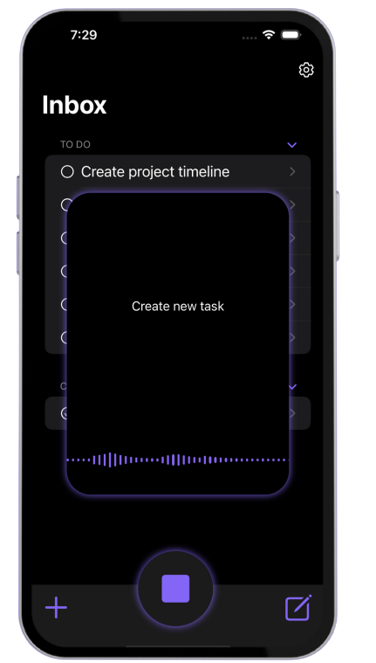
The best way to do this honestly is to speak it. Open Vozly at the end of each day this week and answer one question out loud: “What did I notice most today — what went wrong, or what went right?” You don’t have to fix anything. Just notice. The answer, spoken out loud over seven days, will tell you more about your current Tetris pattern than a month of journaling.
2. Build a Positive Tetris Effect with a Daily Three
This is the single most researched, most replicated, most consistently effective intervention for shifting the Tetris Effectfrom negative to positive — and it takes approximately two minutes.
Every morning, before the day begins, identify three specific things you’re grateful for, or three things you’re genuinely looking forward to, or three things that went well yesterday. Not “my family” or “my health” — those are categories, not specifics. Specific means: “My son made me laugh so hard I snorted my coffee this morning.” Or: “That conversation with my client yesterday actually went better than I expected.” Or simply: “The morning light through the kitchen window looked genuinely beautiful and I noticed it.”
Shawn Achor has run this experiment across multiple cultures, companies, and continents. The result is remarkably consistent: within three weeks of daily practice, the brain begins to scan for positives automatically — because it’s been trained to look for material for the next morning’s list. That’s the Tetris Effect doing exactly what it always does, except now it’s working in your direction.
Speak your three into Vozly every morning. Speaking them rather than writing them makes them louder and more real — your brain processes what it hears differently from what it reads. And Vozly stores them, so after a few weeks you can look back and see the evidence of your own life that your brain had been filtering out.
3. Redirect Your Tetris Effect Toward Opportunities
Here’s a practical application of the Tetris Effect that changes the quality of your work almost immediately: deliberately train your brain to scan for opportunities with the same automatic energy it currently uses to scan for problems.
Most people, when something goes wrong at work, ask: “Why did this happen? Who’s responsible? What went wrong?”These are not bad questions. But if they’re always the first questions — if problem-identification is the automatic default — the Tetris Effect ensures that problems are all you’ll ever reliably find.
Try replacing the automatic response with: “What’s possible from here?” Not as a forced positivity exercise. As a genuine question. When a project changes direction unexpectedly: “What does this make possible that wasn’t possible before?”When a client cancels: “What does this open up?” When something doesn’t work: “What did I learn that I couldn’t have learned any other way?”
This isn’t about pretending problems don’t exist. It’s about training the brain to run a different scan first — and then apply critical thinking to what that scan surfaces. The Tetris Effect means that whichever scan runs first will produce more results over time. Training opportunity-scanning to go first is one of the highest-leverage cognitive habits available.
Use Vozly to capture these opportunity observations as they happen — speak them in the moment, before the critical mind catches up and edits them away. Voice capture is fast enough to catch these first-draft thoughts before the mental overloadof daily work buries them.
4. Use Repetition to Build a Productivity Tetris Effect
Here’s something that will make you look at your morning routine very differently.
The Tetris Effect is built through repetition. The more you engage in a particular thought pattern or activity, the more automatic and pervasive it becomes. This means that whatever you repeat consistently at the start of your day is, quite literally, programming what your brain will notice for the rest of it.
If you start every morning by opening email and reading about everything that needs your attention, your brain spends the day in reactive mode — because you’ve told it, through repetition, that this is how days begin and what days are for.
If you start every morning by speaking your three priorities out loud — “Today, the one thing that matters most is…” — your brain spends the day running a scan for anything that helps or hinders that priority. Because you’ve told it, through repetition, that this is what matters.
This is the proactive productivity principle expressed through the lens of the Tetris Effect: the sequence of your morning ritual isn’t just a preference. It’s a neural instruction. And Vozly is the tool that makes repeating the right instruction the path of least resistance — because speaking your priorities takes fifteen seconds, which means you’ll actually do it, which means the repetition actually happens.
Repetition is everything here. The Tetris Effect doesn’t build from one good morning. It builds from thirty in a row. Then sixty. Then it becomes automatic — and that’s when everything changes.
5. Reset Your Tetris Effect at the End of Every Day
Most people end their workday by mentally replaying everything that didn’t go right. It’s almost automatic — the brain runs a kind of closing audit, scanning for errors, missed opportunities, and things to worry about tomorrow. For people with an active Negative Tetris Effect, this audit can run for hours, long after the laptop is closed.
The end-of-day reset is a deliberate intervention that interrupts this pattern and begins training a different one.
Every evening, before you fully close the day, speak three things into Vozly:
One thing you actually accomplished today. Not attempted — accomplished. Something real, something done, something you can point to.
One moment that went better than you expected. It doesn’t have to be significant. A conversation that went smoothly. A task that took less time than you thought. A moment that surprised you positively.
One thing you’re choosing to set down. The thing you’d otherwise carry into tomorrow morning as the first thought when you wake up. Name it, and tell yourself — out loud — that it will be there when you need it, in Vozly, where you don’t have to hold it yourself.
This practice takes about three minutes. But done consistently, it begins to shift the brain’s closing audit from a problem-scan to a progress-and-release scan. Which means you wake up the next morning running a slightly different program. And over weeks and months, that slightly different program compounds into a genuinely different Tetris Effect — one that works with your ambitions rather than quietly undermining them.
The Tetris Effect Is Running Right Now
Here’s the thing. You didn’t choose your current Tetris Effect. It was built, gradually and largely invisibly, by everything you’ve paid attention to — the feedback you got, the environments you were in, the patterns you repeated without knowing you were repeating them.
But you can choose the next one.
Not by forcing positivity. Not by pretending problems don’t exist. But by being deliberate, consistent, and specific about what you train your brain to look for — because the brain, remarkable and obedient instrument that it is, will get very good at finding exactly that.
The blocks are always falling. The question is: what are you training your brain to do with them?
Download Vozly. Speak your three things tomorrow morning. Do it again the day after. And watch the world start to look subtly, unmistakably different — not because it changed, but because you did.