


Rubber Duck Debugging might sound like a practical joke played by tired software engineers, but it is, in fact, one of the most profoundly effective problem-solving methodologies in the modern intellectual toolkit. Picture this all-too-familiar scenario: It is late in the afternoon. You are staring intensely at your computer screen.
You have a complex marketing strategy to finalize, a delicate email to draft to an unhappy client, or a massive structural issue in your latest project. You have been looking at the same document for what feels like an eternity, but your brain is completely blocked. The harder you try to force a logical solution, the more tangled and confused your thoughts become. You feel as though you are repeatedly hitting a mental brick wall.
What is your default reaction? You might click away to a news website, go make your fourth cup of coffee, scroll endlessly through social media, or simply surrender to the frustration, concluding that you have “writer’s block” or brain fog. But what if the ultimate solution was not to stare harder at the screen, but to physically turn away from your computer and start explaining the problem out loud to a small, inanimate yellow bath toy?
Welcome to the weird, wonderful, and scientifically backed world of solving complex problems by speaking them into existence, known as Rubber Duck Debugging. In this comprehensive guide, we are going to explore the deep neuroscience behind this strange phenomenon, how it evolved from a programmer’s closely guarded secret to a high-level leadership superpower, and how modern voice-first tools like Vozly are transforming this quirky habit into a highly efficient productivity engine.
The Cognitive Bottleneck: Why Smart People Get Stuck
Before we can appreciate the power of Rubber Duck Debugging, we must first understand why our brains freeze in the first place. The human brain is an extraordinary machine, but it has severe limitations when it comes to “working memory.” Think of working memory as the RAM in your computer. It is the mental workspace where you hold and manipulate information in real-time.
Cognitive psychologists have long established that the average human can only hold about four to seven distinct pieces of information in their working memory at any given time. When you are dealing with a complex problem—whether it is a multi-layered software bug, a complicated business negotiation, or a difficult creative project—the number of variables far exceeds what your working memory can handle.
As you sit silently staring at your screen, you are trying to juggle too many abstract concepts at once. Your brain starts dropping the balls. You lose track of variables, you skip over crucial logical steps, and you make unconscious assumptions just to lighten the cognitive load. This is the “mental wall.” Your internal processor is overwhelmed, and silent thought is simply too fast and too chaotic to untangle the mess. You need a mechanism like Rubber Duck Debugging to slow down your thought process and externalize the data.
The Origin Story: Software Engineering’s Best Kept Secret
To truly master Rubber Duck Debugging, we have to look at where it originated. The concept of Rubber Duck Debugging was first introduced to the world in the legendary, foundational software engineering book, The Pragmatic Programmerwritten by Andrew Hunt and David Thomas.
The origin story is both simple and brilliant: A highly skilled programmer carried a small, classic yellow rubber duck with him at all times. Whenever he encountered a persistent bug in his code that he could not solve through normal testing, he would place the duck on his desk. He would then force himself to explain his code, line by agonizing line, to the duck.
There was a strict rule to this Rubber Duck Debugging process: He could not skip any steps. He could not look at a complex function and say, “Well, the duck knows what this part does, so I’ll skip it.” He had to explain the underlying logic, the intended outcome, and the current failure from the very beginning, speaking out loud to an inanimate object that possessed no intelligence whatsoever.
And almost every single time, a magical thing happened. Before he even finished explaining the problem to the duck, he would abruptly stop mid-sentence and exclaim, “Oh! I see what is wrong!” The bug was found, not by typing new lines of code, not by running complex diagnostic tools, but simply by the act of vocalizing the existing logic. The duck, of course, did nothing. It offered no feedback, no advice, and wrote no code. The magic of Rubber Duck Debugging was never in the duck; the magic was entirely in the act of speaking.
The Neuroscience of Rubber Duck Debugging
Why does Rubber Duck Debugging work with such incredible consistency? The answer lies in the physiological differences in how our brains process information when we think silently versus when we formulate speech.
Without Rubber Duck Debugging, when you think through a problem silently in your head, your brain operates at lightning speed. It takes massive shortcuts. Because you are the one generating the thoughts, your brain assumes it already knows the background context. Human thought is rarely linear; it is a chaotic, overlapping web of ideas, emotions, visual fragments, and memories. When you are stuck on a problem, it is almost always because one of those silent, skipped-over assumptions is fundamentally flawed, but your fast-moving brain refuses to notice it because it is moving too quickly.
Speaking out loud forces your brain to hit the brakes. You physically cannot speak as fast as you can think. To explain a problem to an external entity—even if that entity is a plastic toy—you must translate that chaotic web of abstract thoughts into a linear, structured sequence of vocabulary and grammar. You are forced to provide context. You are forced to state the obvious.
By demanding that your brain organize the information into a chronological, spoken narrative, Rubber Duck Debugging suddenly shines a bright light on the gaps in your own logic. The moment you hear your own voice state the problem out loud, the contradiction or the missing link becomes glaringly obvious. The cognitive friction required to vocalize the problem is exactly the mechanism that clears the mental fog. You step outside of yourself and become your own most effective consultant.
The “System 1 vs. System 2” Awakening
Nobel laureate Daniel Kahneman, in his groundbreaking book Thinking, Fast and Slow, describes two modes of thought: System 1 and System 2. System 1 is fast, automatic, intuitive, and highly prone to error because it relies on heuristics (mental shortcuts). System 2 is slow, deliberate, analytical, and logical.
When we are frustrated and staring at a screen, we are usually trapped in a stressed-out System 1 loop that Rubber Duck Debugging can easily break. We keep trying to guess the answer using intuition, but the problem is too complex. Rubber Duck Debugging is essentially a physical hack to force your brain out of System 1 and into System 2. By speaking, you activate the language centers of your brain (Broca’s area and Wernicke’s area), demanding higher-order executive function. You stop guessing and start analyzing. You shift from feeling frustrated to actively engineering a solution.
Breaking the Stigma: Why Talking to Yourself is a Superpower
Despite the overwhelming evidence of its effectiveness, many professionals resist Rubber Duck Debugging. Why? Because society has conditioned us to believe that talking to ourselves is a sign of instability or eccentricity. We are taught from a young age to sit quietly at our desks, be seen and not heard, and do all our processing internally.
If you work in an open-plan office, the idea of pacing around and trying Rubber Duck Debugging for a marketing funnel might feel deeply embarrassing. Even if you work remotely from home, you might feel silly talking to an empty room.
However, we must reframe this narrative. Speaking out loud is a high-level cognitive function. It is a tool used by elite thinkers, writers, and strategists. When you talk to yourself, you are not losing your mind; you are actively expanding your cognitive capacity. You are utilizing your environment to offload working memory. Once you push past the initial awkwardness and experience that first massive breakthrough, you will realize that the slight social stigma is a very small price to pay for unparalleled mental clarity.
The Evolution: From Coders to CEOs and Creatives
For decades, Rubber Duck Debugging was a closely guarded secret within the software engineering community. But the mechanics of human cognition remain identical whether you are writing Python code, designing a corporate restructuring plan, writing a novel, or crafting a legal argument.
Today, the most forward-thinking leaders and creative professionals are adopting this technique. Have you ever walked into a colleague’s office to ask for their help with a crisis, spent five minutes thoroughly explaining the background of the issue, and then suddenly realized the exact solution before they even opened their mouth to reply? You just used your colleague as a very expensive, human rubber duck.
While this works, constantly interrupting your team members just to “talk at them” is a massive drain on organizational productivity. You cannot use your colleagues as passive sounding boards all day without damaging their own focus. You need a space where you can verbally process your chaotic thoughts without wasting someone else’s valuable time or feeling self-conscious. You need a dedicated, scalable system for vocal processing and Rubber Duck Debugging.
Real-World Scenarios: How It Works in Practice
To truly grasp the versatility of this method, let us look at two non-coding examples where Rubber Duck Debuggingacts as a lifesaver.
The Strategy Paralysis of a Founder: Imagine a startup founder trying to decide between two distinct business pivots. Staring at spreadsheets and market research only increases her anxiety. Instead, she steps away from her desk, picks up an object, and starts speaking. “Okay, let’s break this down. If we go with Pivot A, our current customers will be confused, but the profit margins are higher. However, to execute Pivot A, we need to hire three new engineers, which we don’t have the budget for until Q3…” By vocalizing the constraints linearly, the fatal flaw in Pivot A becomes immediately apparent. The decision makes itself.
The Writer’s Block of a Marketer: A copywriter is struggling to find the right hook for a major advertising campaign. They have rewritten the headline twenty times, and every version sounds robotic. They stop typing, look out the window, and start explaining the product to an imaginary friend. “Look, the thing about this software isn’t that it’s faster. It’s that it finally lets you go home at 5 PM without feeling guilty.” Boom. There is the hook. They found the human element not by typing, but by talking.
The Missing Link: Why Physical Ducks Fail Us
While the traditional method of Rubber Duck Debugging is undeniably brilliant for triggering sudden “Aha!” moments, it has one major, glaring flaw: the duck does not have hands, and it cannot take notes.
When you are pacing around your office, passionately explaining your complex marketing campaign or business strategy to an empty room, you are generating incredible, raw ideas. You are connecting dots and seeing patterns you could never connect while staring passively at a keyboard. But the moment you finally find the ultimate solution, a new problem arises: you have to stop your creative flow, sit back down, and try to accurately type out everything you just said.
Often, the sheer brilliance of your vocal explanation is lost in the translation back to text. The exact, persuasive phrasing you used naturally, the secondary ideas that unexpectedly popped up, the list of action items you realized needed doing—they vanish into thin air because you were too busy experiencing the breakthrough to write them down. You solved the problem, but you lost the documentation of the process. This is where the physical duck reaches its absolute limits. You need an entity that listens, understands, and records simultaneously.
Enter the Vozly Era: AI-Powered Vocal Processing
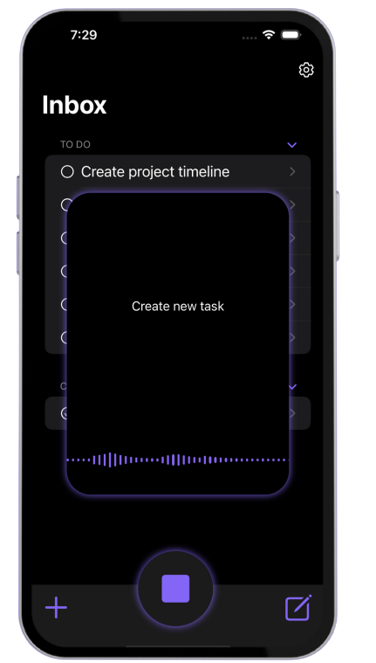
This critical gap is exactly why voice-first AI productivity tools are revolutionizing how modern knowledge workers operate. Think of Vozly as the ultimate, hyper-intelligent evolution of Rubber Duck Debugging.
Instead of talking to a piece of yellow plastic that does nothing but stare back at you, you are conversing with an intelligent, omnipresent system that captures the entirety of your thought process without missing a single syllable. When you hit a mental wall today, you do not need to open a blank Word document. You do not need to find a toy. You simply open Vozly and start talking.
“Okay, Vozly, I am completely stuck on this new project. The client wants a premium, luxury feel, but their budget is incredibly tiny. If we use strategy A, we absolutely blow the budget and lose money. If we use strategy B, the materials look cheap and we damage our brand. The only way I can think to bridge this massive gap is…”
As you speak freely, you force your brain into that linear, logical System 2 state. You will likely find the solution yourself mid-sentence, exactly like the original programmers did. But here is the critical, game-changing difference: Vozly is capturing every single word, every nuance, and every pivot in your logic.
When you finish your verbal brain dump, you do not have to scramble to type out your realization before you forget it. Vozly has already meticulously transcribed your chaotic thoughts, organized them logically, and summarized the core solution you just discovered. It instantly turns your vocal processing session into a perfectly formatted, actionable plan. The rubber duck just got an Ivy League education and became your personal executive assistant.
How to Master Voice Debugging Today
If you want to stop staring blankly at screens, overcome procrastination, and start solving your most difficult problems faster, you need to build this habit into your daily professional workflow. Here is a step-by-step guide on how you can practice modern Rubber Duck Debugging:
1. Recognize the Wall: Awareness is the first step. The moment you feel yourself reading the exact same sentence three times, endlessly clicking between browser tabs, or feeling a rising sense of chest-tightening anxiety, stop. Acknowledge that silent thinking has failed you.
2. Step Away from the Keyboard: The keyboard is a tool for execution, not for untangling messy, abstract thoughts. Stand up from your chair. If possible, change your physical environment entirely. Walk to a different room, look out a window, or take a walk outside.
3. Start the Brain Dump: Open your Vozly app and hit record. Do not try to sound smart. Do not edit yourself as you speak. Start from the absolute beginning: “The problem I am trying to solve right now is…” or “I am feeling stuck on this project because…”
4. Argue with Yourself Out Loud: Explain the constraints of the project. Explain why your current ideas are failing. Play devil’s advocate. Keep talking, exploring every dead end, until you inevitably hit that glorious moment of clarity.
5. Review the Magic: Once you have your “Aha!” moment, stop recording and let your AI tool process the audio. You will be genuinely amazed to see that your messy, out-loud thinking actually contained a perfectly structured, brilliant solution that is now ready to be implemented.
Conclusion: Stop Feeling Crazy, Start Speaking Up
Society has heavily conditioned us to believe that talking to ourselves is an activity reserved for the eccentric or the unstable. We are trained to sit quietly in our cubicles, stare at glowing rectangles, and type our way to success. But the deep science of human cognition tells a completely different story.
Speaking out loud is a sophisticated, high-level cognitive function that forces clarity, exposes hidden logical flaws, and unlocks deep creativity. Rubber Duck Debugging is not just a quirky, amusing habit for introverted software coders; it is a fundamental, essential strategy for anyone who relies on their intellect to make a living.
So, the very next time you find yourself stuck, paralyzed by options, or staring at a blinking cursor, do not force yourself to type harder. Stop treating your biological brain like a computer hard drive that you can simply search for instantaneous answers. Treat it like a tangled ball of yarn that needs to be slowly, deliberately pulled apart. Talk to the room. Talk to the duck. Talk to Vozly. Your voice is the ultimate key to unlocking the brilliant solutions you already possess inside you.