


In the traditional corporate world, a Personel Atlas is often just a fancy name for a directory. It is a static spreadsheet or a dull software interface listing names, titles, and ID numbers.
It tells you who works for you, but it doesn’t reveal the hidden drivers of their productivity.
If you are a modern manager, relying on a static list is a mistake. You don’t need a directory; you need a map of talent, potential, and real-time insights. You need a Personel Atlas that lives and breathes.
In this guide, we will redefine what a Personel Atlas means for high-performing teams and how you can build a dynamic one using voice-first tools like Vozly.
Why the Traditional “Personel Atlas” is Broken
Imagine trying to navigate a new city with a map from 1990. That is what most managers do. They look at an employee’s job description (written 2 years ago) and assume that is all the person is.
A static Personel Atlas fails because:
- It misses context: It doesn’t show you that Sarah is currently stressed about a deadline or that Mike just learned a new coding language on his own.
- It is backward-looking: It records what happened, not what is happening.
- It is silent: It doesn’t capture the tone, the innovative ideas voiced in hallways, or the soft skills.
To lead effectively, you need to upgrade from a “Data Keeper” to a “Talent Cartographer.”
1. Map Potential, Not Just Positions
The first step in creating a modern Personel Atlas is to expand your data points. Standard HR software tracks “Role: Marketing Manager.” A true Leader tracks “Superpower: Crisis Management.”
You need to map the invisible web of your team. Who motivates the others? Who is the silent problem solver? Who is currently risking burnout?
The Voice-First Strategy
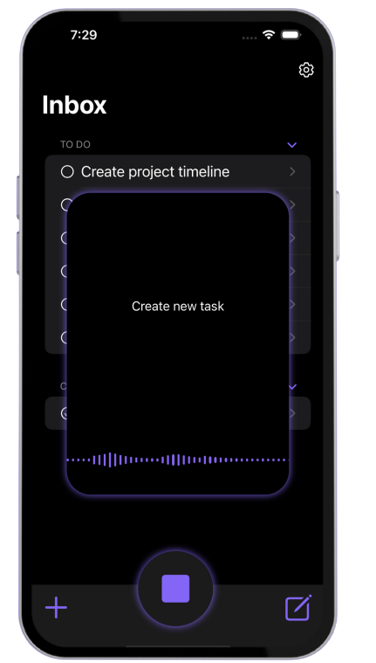
You cannot put “vibes” into an Excel cell easily. But you can speak them. After a meeting, use Vozly to update your mental map instantly.
- “Vozly, note that Jenny showed great leadership today by calming down the angry client. She might be ready for a team lead role.”
By verbalizing these observations, you are actively updating your Personel Atlas with qualitative data that matters.
2. The “Living” Atlas: Capturing Real-Time Feedback
The biggest lie in management is: “I’ll remember to tell him that later.” You won’t. When an employee does something brilliant or makes a critical error, that moment is fleeting. If you wait for the “Annual Review” to bring it up, the context is lost.
A dynamic Personel Atlas is updated daily. It is a collection of micro-feedback loops.
How Vozly Solves “Manager Amnesia”
Carrying a notebook everywhere is awkward. Typing on your phone during a conversation is rude. Voice is the solution. Step into the elevator or your car and unload the feedback into Vozly.
- “Vozly, reminder to praise David for his clean code on the new feature. It saved us 3 hours of debugging.”
Now, when you sit down for your 1:1 meeting, you aren’t scrambling to remember what happened. You open your notes, and your Personel Atlas gives you a precise timeline of their performance.
3. Creating a “Psychological Safety” Map
Google’s famous “Project Aristotle” found that psychological safety is the #1 factor in high-performing teams. Does your current Personel Atlas show you who feels safe and who doesn’t? Probably not.
You need to map the emotional landscape of your team.
- Is the design team feeling unheard?
- Is the sales team feeling isolated?
Detecting Patterns with Voice
When you use voice notes consistently, you start to hear patterns in your own observations. If you check your Vozlyhistory and realize you’ve recorded “Tom looks tired” three times this month, your Atlas is flashing a red warning light. You can intervene before Tom quits. This is proactive leadership. This is using data to be human.
4. The “Skill-Gap” Discovery
A static directory lists “Skills: Java, Python.” But skills evolve. Maybe your junior developer is currently obsessed with AI prompts. If you don’t know this, you might hire an expensive outside consultant for a job your own employee is dying to do.
Update your Personel Atlas by listening to curiosity.
The “Coffee Machine” Insights
Often, employees reveal their true interests in casual chats, not formal meetings. “I was playing around with that new video editing AI last night…” Don’t let that sentence vanish.
- “Vozly, make a note: Alex is interested in AI video tools. Let’s assign him the promo video project.”
You just saved money and boosted engagement, simply by keeping your Atlas updated.
5. From “Me” to “We”: Sharing the Map
The old Personel Atlas was a secret document guarded by HR. The new Atlas is transparent (where appropriate).
Share your observations. Tell your team: “I noticed you’re great at X, so I want to put you on project Y.” When employees see that you are mapping their strengths and not just their attendance, trust skyrockets.
Conclusion: Throw Away the Spreadsheet
A spreadsheet is a tool for accountants. A Personel Atlas is a tool for leaders.
Your team is not a list of rows and columns. They are a dynamic, evolving ecosystem of talent. Don’t let their potential get lost in the chaos of daily work.
Start building a “Living Atlas.” Observe more. Listen better. And use tools like Vozly to capture the brilliance of your team before it fades away.
Don’t just list them. Lead them.