

There’s a story you’ve been telling yourself. Maybe for years.
The story goes like this: you haven’t launched the project yet because you want it to be right. You haven’t sent the email because the wording isn’t quite there. You haven’t started the habit because the timing isn’t perfect.
You haven’t published the work because it still needs one more pass, one more revision, one more round of polish before it’s ready for the world.The story sounds like discipline. It sounds like high standards. It sounds, frankly, like a virtue.Here’s what it actually is: perfectionism fear — and it is one of the most effective forms of self-sabotage available to a capable, intelligent person, precisely because it disguises itself as the opposite.
The psychologist Brené Brown put it plainly: “Perfectionism is not about healthy striving. It’s a 20-ton shield that we lug around thinking it will protect us from the pain of blame, judgment, and shame.” The shield is heavy. And it doesn’t protect you from anything — it just keeps you from moving.
Perfectionism Fear Is Not High Standards
This is the distinction that changes everything, and almost nobody makes it cleanly.High standards are about the work. They are about caring enough to do something well, to revise when something isn’t right, to hold yourself to a genuine level of quality that serves the person on the receiving end. High standards are generative.
They produce things — things that get better over time, things that ship, things that exist in the world and can be judged, refined, and improved.Perfectionism fear is about you. It is about the terror of putting something out and having it be wrong, insufficient, criticizable, embarrassing.
It is about protecting your identity as someone who is capable, smart, and good at things — by never creating the conditions under which that identity could be challenged.The research on adaptive versus maladaptive perfectionism makes this distinction scientifically: adaptive perfectionism — the healthy kind — drives effort, attention to quality, and genuine improvement.
Maladaptive perfectionism — the fear-driven kind — correlates with procrastination, anxiety, avoidance, and lower actual performance over time. The thing people call perfectionism when they say it proudly in job interviews is almost never what they actually have. What they have is perfectionism fear wearing a virtue costume.The difference shows up clearly in behavior:A person with high standards ships things that aren’t perfect and improves them. A person with perfectionism fear doesn’t ship things — or ships them so late, and after so much agonizing delay, that the improvement never actually happens.High standards are output-oriented. Perfectionism fear is identity-protective.
What the Fear Is Actually About
If perfectionism fear is about fear, what exactly is being feared?
The research is consistent: the core of perfectionism fear is fear of failure — specifically, a catastrophic relationship with the possibility of being judged negatively. And more precisely still: it’s the fear that a failed outcome reveals something true and damning about who you are, not just what you produced.
This is the psychological trap at the center of the whole thing. When your identity is bound up in being someone who does excellent work, the act of doing any work becomes a threat. Because any work could be imperfect. And imperfect work, to the perfectionism-fear brain, isn’t just a flawed output — it’s evidence about your fundamental competence, worth, and value as a person.
So the safest move is to not ship. To keep refining. To stay in the revision phase indefinitely, where you can never be proven wrong about yourself, because you never tested the hypothesis.
This is why perfectionism fear is, at its core, a form of cowardice — and saying that isn’t cruel, it’s accurate. It is the choice to protect your self-image over producing value. It is the choice to control the narrative over engaging with reality. It is, as Elizabeth Gilbert wrote, the refusal to let your work be seen because you’re more committed to the protection of your ego than to the work itself.
The Psychology Today overview of perfectionism notes that perfectionists tend to engage in all-or-nothing thinking: if it can’t be perfect, it might as well not exist. Which means the 80% complete, genuinely good, actually useful thing stays locked in your drafts folder — not because it isn’t ready, but because you are not ready for it to be judged.
The Productivity Cost Nobody Talks About
Everyone understands, abstractly, that perfectionism wastes time. But the actual productivity cost of perfectionism fear is much larger than the time you spend over-polishing a single piece of work.
The real cost is everything you don’t start.
The project that never gets a first draft because the vision is so clear and the gap between the vision and your current ability feels too large to bridge. The skill you never build because you’d have to be bad at it before you’d be good at it, and being publicly bad at something feels unbearable. The conversation you never have because you can’t find exactly the right words, and imperfect words feel worse than silence.
Studies on procrastination and perfectionism consistently find that maladaptive perfectionism predicts higher procrastination — not because perfectionists care too much, but because the psychological cost of starting something you might not do perfectly is too high to pay. The result isn’t excellence. It’s paralysis.
And paralysis compounds. Every day you don’t start, the standard for what would justify starting rises a little higher. The thing you’ve been thinking about for six months now carries six months of accumulated expectation. It has to be worth the wait. Which means it has to be better than ever. Which makes it even harder to begin.
This is the loop that perfectionism fear locks you into: the longer you wait for perfect conditions, the more impossible perfect conditions become. The work you never start can never disappoint you — and it can never help anyone, either.
The Perfectionist’s Vocabulary
Perfectionism fear has a language. Once you learn to recognize it, you’ll hear it everywhere — including in your own head.
“I just need a little more time.” Time to do what, exactly? If you can’t answer that specifically, this is the fear talking.
“I want to make sure it’s right.” Right according to whom? By what standard? If the standard keeps moving, the standard is not the problem.
“The timing isn’t perfect.” The timing is never perfect. The window you’re waiting for doesn’t exist. Execution makes its own timing.
“I’m almost ready.” Almost is doing a lot of work in this sentence. Almost has been doing a lot of work for quite a while now.
“I don’t want to put out something that’s not my best.” This one is the most seductive, because it sounds exactly like integrity. But if “not my best” means “not yet validated as excellent before anyone sees it,” then you are not protecting your standards — you are hiding from the possibility of being wrong.
Every one of these phrases has a version that is genuinely true and reasonable — circumstances where more preparation actually matters. The test is whether the preparation is specific and finite, or vague and indefinitely extensible. Real preparation has an end. Perfectionism fear doesn’t.
How to Recognize Perfectionism Fear in Your Own Work
The gap between perfectionism-as-virtue and perfectionism fear is easier to feel than to analyze. Here are the clearest signals that what you’re experiencing is fear, not standards:
You are more focused on how the work will be received than on the work itself. You’re not thinking about whether the idea is good — you’re thinking about what specific people will think, what the criticism might be, whether it will match your reputation. This is identity protection, not quality control.
The finishing is the hard part, not the doing. You can do the work. You struggle to declare it done. Because declaring it done means releasing it into a world where it can be judged — and not doing that keeps the possibility of perfection alive.
You revise toward safety, not improvement. Your edits are not making the work substantially better. They’re sanding off edges, hedging statements, removing anything that could be argued with. This is risk reduction disguised as refinement.
You compare your drafts to others’ finished work. Your messy, in-progress version of the thing looks nothing like the polished, published, already-iterated version someone else put out. Of course it doesn’t. No one’s draft looks like their final product. But this comparison gives you permission to wait longer.
Positive feedback doesn’t help. Someone tells you the work is good. You discount it — they’re being kind, they don’t know the full picture, they haven’t seen the parts that aren’t right yet. This is a signal. Perfectionism fear is immune to encouragement because its job is not to help the work get better. Its job is to keep the work hidden.
Breaking Perfectionism Fear with Your Voice
The most effective intervention for perfectionism fear is not a mindset shift. It’s a behavioral one. And specifically, it’s the practice of externalizing — getting things out of your head and into a form where they can be examined, acted on, and shipped.
Here’s why this matters: perfectionism fear thrives in the private space of your own mind. In there, the imagined judgment of others is unlimited and omnidirectional. The vision is always more beautiful than the execution. The gap between what you want to make and what you’re capable of making is always legible, always present, always available to justify not starting.
The moment you speak something out loud — a first version, a half-formed idea, an honest statement of where you are with a project — you have done the thing perfectionism fear is most afraid of. You have made something real. And the moment it is real, it can be worked with.
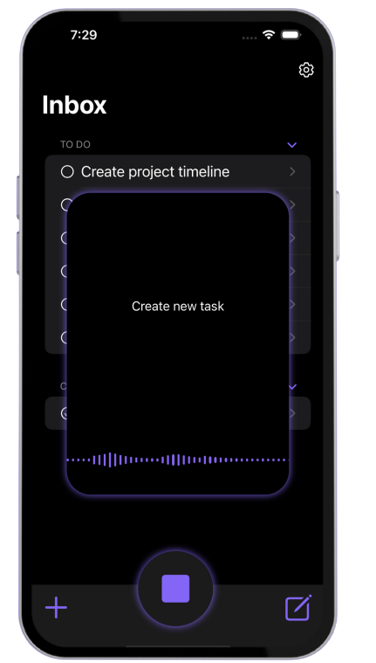
This is where Vozly changes the game. The activation energy required to speak a first draft of something is infinitely lower than the activation energy required to type a polished one. When you say, out loud, “here’s what I’m working on and where I’m stuck” — even just to an app, even just for yourself — you have broken the seal. You have released the grip of the imaginary perfect version and replaced it with an actual starting point.
Use Vozly to capture the work before your inner critic gets to review it. Speak the rough version. The first sentence you’d be embarrassed to show anyone. The version that acknowledges you don’t know exactly how this ends. The version that is alive and imperfect and real — rather than the perfect, finished, polished version that doesn’t exist yet and never will until something imperfect goes first.
The Practice: Ship Something Incomplete Today
This is not a metaphor. It is a specific, behavioral recommendation.
Before you close this tab, open Vozly and speak the answer to this question: “What is one thing I have been waiting to start or finish because it doesn’t feel ready?”
Just name it. Out loud. Into the app. One thing.
Now speak a second thing: “What is the smallest version of this I could put into the world today?”
Not the finished version. Not the good version. The smallest version. The version that is 60% of what you want it to be and would still be useful, interesting, or honest if it existed right now. Speak that version out loud too.
The research on task initiation is clear: the hardest part of any task is starting. Once started, completion follows with far less resistance than the perfectionism-fear brain predicts. The version you produce won’t be perfect. It will be better than the version that stayed in your head forever.
Done is not the enemy of good. Perfectionism fear is. Done is the only path to good — because good, real good, comes from iteration, feedback, and engagement with the actual world. It doesn’t come from an indefinitely extended revision process in the privacy of your own imagination.
Ship something incomplete today. Note how it feels. Note that the catastrophe you predicted almost certainly didn’t materialize. Note that what you actually felt, after the initial discomfort, was closer to relief.
That relief is what perfectionism fear has been keeping you from.
Final Thought: What Courage Actually Looks Like Here
Courage in the context of perfectionism fear doesn’t look like boldness. It doesn’t look like confidence, or certainty, or the absence of doubt. It looks like clicking publish when you’re not sure it’s ready. It looks like sending the email before you’ve found the perfect words. It looks like starting the project before you know how it ends.
The courageous version of yourself is not the one who waits until the work is perfect. It’s the one who does the work anyway, ships it anyway, and trusts that the version that exists in the world — imperfect, real, available to be criticized and improved — is more valuable than the perfect version that never left your head.
You’re not a perfectionist. You’re someone who is capable of excellent work, who is afraid of being seen doing imperfect work, and who has been using one as cover for the other.
That’s okay. It’s human. Now you know what it is — and knowing is the first step to doing something different.
Open Vozly, speak the thing you’ve been waiting to start, and let today be the day the waiting ends.

What is perfectionism fear?
Perfectionism fear is the tendency to delay, avoid, or indefinitely refine work not because it genuinely needs more effort, but because finishing and releasing it creates the risk of being judged negatively. Unlike genuine high standards — which are focused on improving the quality of the work — perfectionism fear is focused on protecting the self-image of the person doing the work. It is driven by a deep fear of failure, specifically the belief that imperfect output reflects something true and damning about one’s fundamental worth or competence. Research consistently categorizes this as “maladaptive perfectionism” and links it to higher procrastination, anxiety, and lower actual performance over time.
How is perfectionism fear different from having high standards?
High standards are output-oriented: they drive you to improve the work, ship it, get feedback, and do better next time. Perfectionism fear is identity-protective: it keeps you in the revision phase indefinitely because releasing imperfect work feels like evidence of your inadequacy. The clearest behavioral distinction is that high standards produce things — things that exist in the world and get better through iteration — while perfectionism fear tends to produce nothing, or things released so late and with so much agonizing that no real improvement cycle ever begins. If your standard keeps moving every time you approach it, that’s a signal you’re dealing with fear, not quality control.