


Building a habit of regular English practice isn’t always easy—especially when life gets busy. We all start with high motivation, purchasing grammar books, downloading gamified apps, or creating extensive flashcard decks. Yet, for many learners, consistency becomes the biggest challenge. Life gets in the way, motivation fades, and those study materials often end up gathering dust. The missing link isn’t usually a lack of resources, but rather a lack of integration into daily life.
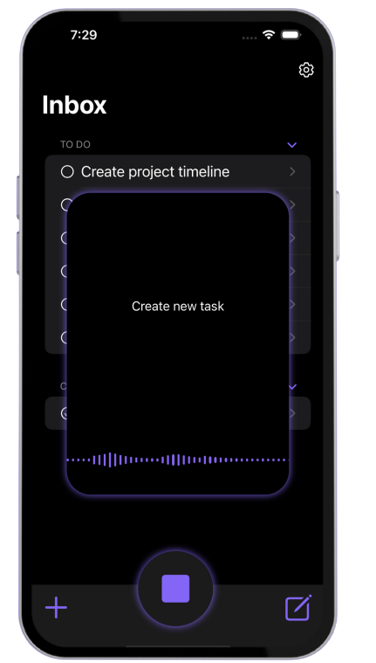
That’s exactly where voice-based tools come into play. Using your own voice as the core learning tool can transform the way you absorb the language, making your English practice more natural, intuitive, and even enjoyable. Vozly, a voice-powered to-do list app, is designed to be a productivity tool, but it creates a unique opportunity for language learners. By shifting your daily planning from typing to speaking, you turn a mundane administrative task into a powerful learning engine.
Vozly is not just for getting things done; it is a surprisingly effective companion for language learning. When you speak to record tasks, notes, or quick thoughts, you create micro-moments of English practice throughout the day—moments that strengthen your brain’s recall pathways without feeling like “study time.” Research in cognitive linguistics shows that saying words aloud increases retention because the brain ties meaning to motor action and sound simultaneously. In other words, hearing your own voice in English activates multiple learning channels at once, bridging the gap between passive understanding and active fluency.
If you’d like to explore how voice notes can make learning English even easier, check out our post “Make Learning English Easy with Voice Notes: As Magical as Harry Potter’s Spells.”
The Science of Sound: Why Your Own Voice Strengthens English Practice
There’s a unique neurological advantage in using your voice as part of the learning process, often referred to as the “production effect.” When you read silently, your brain engages in passive processing. However, when you record a note or a task verbally during your English practice, your brain processes language through several systems at the same time: speech production, auditory feedback, memory encoding, and attention.
This multisensory effect deepens learning without requiring extra time or effort. You’re not only hearing English—you’re producing it, adjusting it, and reaffirming it through your own vocal patterns. For example, when you simply think about the word “schedule,” you might recognize it. But when you speak it into Vozly to set a reminder, your mouth has to form the shapes, your ears hear the pronunciation, and your brain validates the meaning.
Over time, this builds speaking confidence and accelerates vocabulary recall in a way silent studying cannot match. It forces you to stop translating in your head and start thinking in the target language. This is the essence of effective English practice: moving from theory to action. By making this a daily habit, you are training your brain to access English vocabulary as quickly and naturally as your native language.
Turning Mundane Tasks into Active Language Lessons
One of the biggest hurdles in English practice is finding “something to say.” Many learners freeze up because they feel they need a complex topic to discuss. Vozly eliminates this pressure by grounding your practice in reality. You don’t need to write an essay; you just need to organize your day.
Here is how you can transform different types of daily notes into targeted language exercises:
- The Grocery List (Vocabulary Builder): Instead of silently checking off items, dictate your shopping list in English. Don’t just say “Apples.” Say, “I need to buy a bag of red apples and a carton of milk.” This reinforces everyday nouns and quantities.
- The Daily Agenda (Future Tense Mastery): When planning your morning, use the future tense. Record a note saying, “At 10 AM, I will have a meeting with the marketing team,” or “I am going to finish the monthly report by noon.” This makes grammatical structures like ‘will’ and ‘going to’ feel like second nature rather than textbook rules.
- Quick Reflections (Past Tense Review): Use Vozly to capture a quick thought about something that just happened. “I just finished a great workout,” or “The traffic was terrible this morning.” This allows you to practice the past tense in a relevant, personal context.
Using Vozly for your daily lists, reminders, or even short reflective thoughts allows English to naturally integrate into your routine. Instead of forcing practice, you weave small bursts of language interaction into activities you’re already doing. This turns learning into something effortless and continuous—almost like living lightly in the language.
Overcoming the “Fear of Speaking” in a Safe Space
For many learners, the anxiety of speaking in front of others is a major barrier. The fear of making mistakes, mispronouncing words, or being judged can lead to silence. This is where Vozly acts as a safe, judgment-free zone. When you use the app, there is no teacher correcting you, no classmates listening, and no pressure to be perfect. It is just you and your phone.
This private environment allows you to experiment with new words and complex sentence structures without risk. If you stumble over a word while recording a note, you can simply delete it and try again. This repetition is a crucial part of English practice. It allows you to “debug” your speech in private, so when you eventually speak to a real person, you’ve already rehearsed the phrases dozens of times.
By normalizing the sound of your own voice speaking English, you reduce the psychological distance between you and the language. The more you hear yourself speaking confidently in your notes, the more that confidence will transfer to real-world conversations.
The Feedback Loop: Listening to Improve
Another hidden benefit of using voice notes for English practice is the ability to listen back to yourself. In traditional conversation, once words are spoken, they disappear. With Vozly, your voice notes remain accessible until you complete the task.
Take a moment to listen to the tasks you recorded earlier in the day. This creates a valuable feedback loop. You might notice that you mumbled a specific word or that your intonation sounded flat. This self-awareness is incredibly powerful. You become your own teacher, spotting areas for improvement that you might miss in the heat of a conversation.
You can even challenge yourself: “Did I sound natural in that recording? Could I have used a better adjective?” This active review process turns a simple to-do list into a dynamic pronunciation lab, helping you refine your accent and clarity over time.
English Practice Meets Real-Life Learning
Of course, while self-study is fundamental, complementary structured learning is still incredibly valuable. If you want deeper guidance with grammar, pronunciation, or complex conversation nuances, pairing daily voice-based micro-practice with expert sessions is a powerful combination.
A great resource for this is Preply, where you can find tutors to refine your skills while Vozly keeps you immersed in English the rest of the day. Think of it as a balanced ecosystem:
- Vozly provides the quantity—the frequent, low-stakes repetition that builds habit and muscle memory.
- Preply provides the quality—the professional feedback and structured guidance that ensures you are on the right track.
Together, they create a comprehensive learning lifestyle. You use your tutor sessions to learn new concepts and correct persistent errors, and then you use Vozly to practice those concepts in your daily life. For instance, if your tutor teaches you a new idiom, make it a goal to use that idiom in one of your Vozly notes the very next day. This immediate application solidifies the knowledge and ensures that your English practice is always evolving.
A More Natural Way to Learn
By letting English flow into your daily routine through voice notes, you turn language learning from a task into a habit. The more you speak, the more confident and fluent you become—even if each interaction lasts just a few seconds. That’s the beauty of using a voice to-do list as a learning tool: small actions compound into meaningful progress.
Consistency is the key to fluency, but consistency is hard when it requires setting aside an hour every day for study. It is much easier when the practice is tied to something you have to do anyway, like organizing your life. You stop being a “student” of English and start being a “user” of English.
If you’re ready to make English part of your everyday life instead of another item on your study checklist, your own voice might be the most powerful tool you have. And Vozly is the perfect place to put it to work.
Conclusion: Let Your Voice Lead the Way to Fluency
English learning doesn’t have to be hard. It doesn’t require hours of agonizing studying or obsessing over perfect grammar rules in a textbook. What you really need is consistency, frequent speaking practice, and a system that keeps you organized while you learn.
Vozly gives you all three in one simple package.
By turning your daily to-do list into a voice-powered learning tool, you build confidence, improve pronunciation, and make English a natural part of your everyday life. You transform the passive act of planning into the active joy of speaking. And when you pair this habit with the professional guidance available from platforms like Preply, your progress becomes unstoppable.
Don’t wait for the “perfect time” to start speaking. Your voice is your strongest tool, and it is ready to use right now. Open Vozly, press record, and let your voice lead you forward.