


Here’s something that happens to almost everyone at some point: you have a problem that keeps coming back. You miss deadlines repeatedly. You procrastinate on the same type of task every single week. You feel overwhelmed despite having a perfectly organized to-do list. You start the day with great intentions and somehow end it having worked hard on everything except what actually mattered.
So you try to fix it. You download a new app. You restructure your morning routine. You read an article about time blocking. Things improve for a week or two — and then the same problem is back, wearing slightly different clothes, sitting in the same chair, drinking your coffee, and acting like it never left.
The reason this happens is almost never what you think it is. The real reason — the actual root cause — is usually hiding two or three layers below the surface, quietly running the show while you busily rearrange the furniture above it.
This is exactly the problem that the 5 Whys Method was designed to solve. And it was invented not by a productivity guru or a self-help author, but by the founder of one of the most efficient manufacturing systems in human history.
What Is the 5 Whys Method?
The 5 Whys Method is a root cause analysis technique developed by Sakichi Toyoda — the founder of Toyota Industries — in the 1930s. It was later formalized by Taiichi Ohno as a cornerstone of the Toyota Production System, the manufacturing philosophy that transformed a small Japanese loom company into the world’s most studied model of operational efficiency.
The premise is disarmingly simple: when a problem occurs, don’t fix the first thing you see. Ask why it happened. Then take that answer and ask why again. Then again. And again. And once more. By the fifth why, you’re almost always looking at something fundamentally different from where you started — not the symptom, but the system beneath it.
Taiichi Ohno described it this way: “By repeating ‘why’ five times, the nature of the problem as well as its solution becomes clear.”
Here’s the classic example from Toyota’s own factory floor. A machine stops working.
- Why did the machine stop? Because it overloaded and blew a fuse.
- Why did it overload? Because the bearing wasn’t lubricated properly.
- Why wasn’t it lubricated? Because the lubrication pump wasn’t working.
- Why wasn’t the pump working? Because the pump shaft was worn.
- Why was the shaft worn? Because there was no maintenance schedule and no filter on the inlet.
If you had stopped at the first why, you would have replaced the fuse. The machine would have stopped again within days. By getting to the fifth why, you discovered that the real problem was a systemic maintenance failure — and fixing that meant the machine didn’t stop again.
That’s the 5 Whys Method. And it works exactly the same way on your productivity problems.
Why Your Productivity Problems Keep Coming Back
Before we get into how to use the 5 Whys Method for yourself, it’s worth sitting with something uncomfortable: most productivity advice — including most of what you’ve tried — addresses symptoms, not causes.
Feeling overwhelmed? Here’s a better organization system. Procrastinating? Here’s a timer technique. Distracted? Here’s an app that blocks other apps. Missing deadlines? Here’s a calendar template.
These aren’t bad suggestions. But they’re all operating at the surface level. They’re replacing the fuse. And if the underlying cause is still there — if the pump shaft is still worn — the same problem will return, reliably, as soon as the novelty of the new system wears off.
This is why the average person has tried at least five different productivity systems and still doesn’t feel productive. Not because the systems were bad. Because they were treating the symptom while the cause went unexamined.
The 5 Whys Method forces you to examine the cause. It’s not comfortable — because what you find at the fifth why is almost never a tool problem or a time management problem. It’s almost always a values problem, a fear problem, a clarity problem, or a systemic pattern that no app can fix. But once you see it, you can actually do something about it. And that something, for the first time, actually sticks.
The 5 Whys Method in Real Life: Three Productivity Examples
Let’s make this concrete. Here are three common productivity problems run through the 5 Whys Method — and what turns up at the bottom.
Example 1: The Procrastination Loop
Problem: I keep procrastinating on writing the report.
- Why? Because every time I sit down to write, I feel stuck after the first paragraph.
- Why? Because I’m not sure what the main argument of the report actually is.
- Why? Because I haven’t clearly defined what success looks like for this report.
- Why? Because nobody gave me a clear brief and I was too uncomfortable to ask for one.
- Why? Because I’m worried that asking for clarification will make me look unprepared.
Root cause: Fear of appearing incompetent is preventing you from getting the information you need to do the work.
The fix is not a new writing app or a Pomodoro timer. The fix is one conversation — asking for the brief. That’s it. Everything else was downstream of not having that conversation.
Example 2: The Overwhelmed Calendar
Problem: I feel overwhelmed every Monday morning before the week even starts.
- Why? Because my calendar is packed with meetings and I can’t see any time to do actual work.
- Why? Because I said yes to every meeting request that came in last week.
- Why? Because I find it very difficult to say no to requests from colleagues and managers.
- Why? Because I’m afraid that saying no will damage my relationships or my reputation.
- Why? Because I believe, on some level, that my value at work comes from my availability rather than my output.
Root cause: A deep belief that being helpful and accessible is more important than doing your best work — and that belief is quietly sabotaging your calendar every single week.
The fix is not a calendar app or a time-blocking template. The fix is a decision, made consciously, about what your actual value is — and what kind of boundaries that decision requires.
Example 3: The Incomplete Projects Pattern
Problem: I consistently start projects enthusiastically but don’t finish them.
- Why? Because I lose motivation partway through.
- Why? Because the initial excitement fades when the work gets difficult and repetitive.
- Why? Because I’m much more energized by new ideas than by the execution phase.
- Why? Because the execution phase requires sustained attention to detail, which I find draining.
- Why? Because I’ve never built a system for maintaining momentum through the difficult middle — I rely on initial excitement and then white-knuckle it, which never works.
Root cause: You’re relying on a fuel source — excitement — that is always temporary. You need a different fuel source for the middle of projects: systems, accountability, and milestones.
The fix is not more motivation. It’s structural — building the scaffolding that carries you through the part where motivation naturally dips. That’s a very different intervention from “try harder.”
How to Run a 5 Whys Method Session on Your Own Productivity
Here’s the practical guide. You don’t need a whiteboard or a facilitator. You need fifteen minutes and something to speak into.
Step 1: Define the Problem Precisely
The 5 Whys Method only works if you start with a specific, honest problem statement. “I’m not productive” is too vague. “I consistently miss my self-imposed Friday deadlines for the weekly report” is specific enough to trace.
Resist the urge to define the problem in a way that already implies the solution. “I don’t have enough time to do deep work” already assumes the problem is time. Maybe it is. But maybe it isn’t — and you won’t find out if you’ve already answered the question in the way you stated the problem.
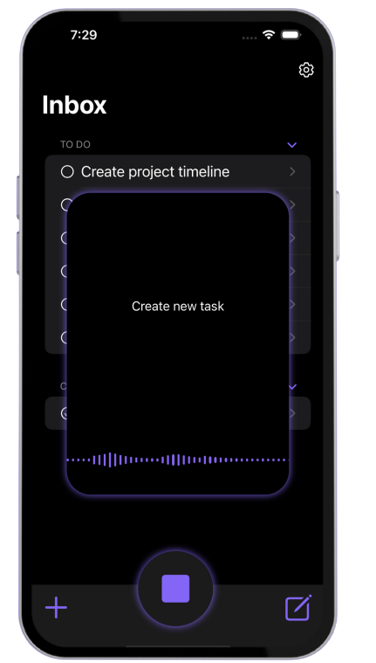
Open Vozly and speak your problem statement out loud. Hearing yourself say it matters — it forces a precision that staying in your own head often doesn’t.
Step 2: Ask Why — And Insist on the Honest Answer
For each why, the answer needs to be a fact, not a theory. Not what you think might be causing it — what you actually know, from evidence, is causing it.
This is harder than it sounds. The tempting answers are the ones that externalize blame — “because my manager keeps interrupting me,” “because the tool is broken,” “because there isn’t enough time.” These may be true. But they’re often partial truths that allow you to avoid looking at the part you have influence over.
The most useful answers are the ones that make you slightly uncomfortable. That discomfort is usually a sign that you’re getting close to something real.
Speak each answer into Vozly before moving to the next why. Saying it out loud — rather than thinking it — forces a commitment to the answer. It’s much harder to be vague or self-deceiving when you can hear your own voice.
Step 3: Follow the Chain Without Jumping
The most common mistake in the 5 Whys Method is jumping ahead to a solution before you’ve finished asking questions. You hit the second or third why, recognize something uncomfortable, and immediately start thinking about how to fix it.
Resist this. The fix you identify at why number two is almost always a symptom fix. Stay in the questions until you reach something that is systemic — a structure, a belief, a pattern — rather than a single event.
If you’re doing this with Vozly, you have a natural check: each answer is recorded before the next question begins. You can’t skip ahead if you’ve committed each answer to the record.
Step 4: Identify the Root Cause — Not the Nearest Cause
By the fourth or fifth why, something will usually shift. The answers will start to feel different — less like events and more like conditions. Less like things that happened and more like things that are structurally in place.
That’s the root cause. It has a different texture from the earlier answers. It often feels slightly revelatory — the sense of “oh, so that’s what’s actually going on.” Sometimes it’s uncomfortable. Occasionally it’s surprising. But it’s almost always something that, once seen, you can’t unsee.
Step 5: Design a Fix That Addresses the Root
The final step of the 5 Whys Method is to design one specific, actionable intervention that addresses what you found at the bottom of the chain. Not five interventions. One.
The fix should be structural wherever possible — something that changes the system, not just the behavior. If the root cause is a missing maintenance schedule, the fix is to create one. If the root cause is a fear of asking for clarification, the fix is to have one specific conversation. If the root cause is relying on excitement as your primary fuel, the fix is to build one accountability structure that doesn’t require excitement to function.
Speak this fix into Vozly as a commitment. Not a vague intention — a specific next action. What are you going to do, and when? Heard in your own voice, that commitment lands differently than a typed note. It feels like something you’ve said to another person. And that matters.
The 5 Whys Method for Daily Micro-Problems
You don’t need to reserve the 5 Whys Method for big, recurring productivity breakdowns. It’s also remarkably effective as a quick daily practice for the smaller frustrations that accumulate into overall stuckness.
Something went wrong today. A task took three times longer than it should have. A conversation didn’t land. You felt inexplicably resistant to starting something you’d been looking forward to.
Instead of letting these moments pass unexamined — which is what most people do, because examining them takes effort — spend two minutes with three or four whys. You won’t always get to the root in a quick session. But you’ll often surface something useful that a surface-level reaction would have missed.
Use Vozly for this. Speak the problem, then speak the whys, in sequence. The act of speaking, rather than just thinking, engages a different mode of processing — more deliberate, more honest, more likely to surface the real thing. It’s like having a very brief conversation with yourself in which you’re not allowed to be vague.
This connects directly to the kind of proactive productivity practice that prevents the same problems from recurring week after week: not just managing the symptoms of your challenges, but occasionally going underneath them to find out what’s actually driving them.
What the 5 Whys Method Reveals That Productivity Apps Can’t
Here’s the honest truth about the 5 Whys Method — and why it feels different from most productivity advice.
Most tools give you a better way to manage the surface of your work. A better task list. A better calendar. A better focus timer. These are genuinely useful. But they’re working at the level of behavior — what you do.
The 5 Whys Method works at the level of cause — why you do what you do. And these are different levels of intervention with profoundly different effects.
When you fix a behavior, you change what happens on the surface. The problem often returns through a different route, because the underlying cause is still in place.
When you fix a cause, you change the condition that was generating the problem. The problem tends to stay fixed. Not because you’re trying harder, but because you’ve altered the system that was producing it.
This is Toyota’s core insight, applied to a factory floor in the 1930s and just as true for your Monday morning calendar in 2026: a problem you fix at the symptom level will recur. A problem you fix at the root cause level stays fixed.
And the fastest, lowest-friction way to run a 5 Whys Method session on any problem — big or small — is to open Vozly, state the problem out loud, and speak the whys in sequence until you hit something that feels fundamentally true.
Five questions. Fifteen minutes. A completely different relationship with the problems that keep coming back.

What is the 5 Whys Method?
The 5 Whys Method is a root cause analysis technique developed by Sakichi Toyoda, the founder of Toyota Industries, in the 1930s. It involves stating a problem clearly and then asking “why” five times in sequence, with each answer becoming the basis for the next question. The goal is to move past the visible symptom of a problem to the underlying systemic cause — the thing that, if addressed, prevents the problem from recurring rather than simply resolving it temporarily.