


An autonomous budget report is a self-generating financial document that uses artificial intelligence to automatically log, categorize, and analyze your expenses without requiring any manual data entry or spreadsheet manipulation. By leveraging voice-first AI technology, users can simply speak their daily transactions out loud, allowing the system to autonomously translate that raw audio into a structured, real-time financial overview. This fundamentally eliminates the friction of traditional budgeting, replacing tedious manual tracking with intelligent, instant categorization.
If you have ever felt a knot of anxiety at the end of the month while staring at a chaotic pile of receipts and a blank Excel spreadsheet, you are not alone. Traditional budgeting systems are fundamentally broken because they rely on human willpower to perform repetitive, boring data entry. But we are entering a new era of the Agentic Economy, where AI tools are no longer just passive assistants; they are active agents that handle complex workflows from start to finish.
In this comprehensive guide, we are going to explore why manual tracking causes massive financial decision fatigue, how the mechanics of an autonomous budget report actually work, and the brilliant ways modern voice AI tools like Vozly are transforming financial stress into absolute clarity.
This is why an autonomous budget report is the ultimate financial tool.
The Core Problem: Financial Decision Fatigue
Why do so many smart, successful professionals fail at budgeting? The answer lies in cognitive psychology, specifically a concept known as “Decision Fatigue.”
Every time you make a purchase, your brain has to make a series of micro-decisions to track it properly. You have to remember the exact amount, open an app, navigate to the correct input field, decide whether that $45 coffee shop meeting belongs in “Meals” or “Business Expenses,” and save the entry. Doing this once is easy. Doing this four times a day, every day, for a month drains your executive function.
When your brain is already exhausted from making critical leadership decisions at work, the friction of manual data entry becomes unbearable. So, what happens? You procrastinate. You tell yourself, “I will log all these receipts on Sunday.” But Sunday comes, and the pile is too big, so you avoid it completely. This avoidance creates a dark cloud of financial anxiety. You stop looking at your bank accounts because you are afraid of what you might find.
To break this cycle, you must completely remove the friction of data entry. You need a system that acts autonomously.
What Exactly is an Autonomous Budget Report?
In the context of modern productivity, “autonomous” means capable of operating independently without human intervention. An autonomous budget report flips the traditional financial model upside down.
Instead of you serving the spreadsheet, the AI serves you. It acts as an invisible, highly competent executive assistant who is always standing by to take notes. The process is entirely frictionless. You experience a financial event (e.g., paying for a taxi), you vocalize that event into your voice AI tool, and you move on with your life.
The AI agent takes over from there. It processes the natural language, extracts the numerical data, identifies the context, assigns it to the correct budget category, and updates your total monthly spending dashboard. The report builds itself in the background.
5 Ways an Autonomous Budget Report Uses Voice AI
Transitioning to an autonomous budget report is not just a technological upgrade; it is a psychological relief. Here are the five ways voice AI changes the game:
1. Frictionless Expense Logging (Talk, Don’t Type)
Typing out expenses is a chore. Speaking is natural. With a voice-first AI tool, logging an expense takes exactly three seconds. As you walk out of a restaurant, you simply open your app and say, “I just spent 85 dollars on a client lunch with Sarah.” That is it. There are no drop-down menus to navigate and no tiny keyboards to tap. By lowering the barrier to entry to zero, voice AI ensures that you actually track 100% of your expenses as they happen.
2. Real-Time Categorization via NLP
Natural Language Processing (NLP) is the brain behind the autonomous budget report. When you say, “I bought printer paper for 20 dollars,” the AI does not just transcribe the text. It understands the semantic meaning of “printer paper” and automatically assigns it to the “Office Supplies” category. It removes the burden of categorization from your shoulders.
3. Eliminating the “End-of-Month” Spreadsheet Panic
Because your expenses are being processed and categorized autonomously in real-time, the concept of “doing your budget” at the end of the month disappears. Your financial report is always up to date. Whether it is the 3rd of the month or the 28th, you can open your dashboard and instantly see exactly where your money is going, beautifully formatted and ready to review.
4. Contextual Spending Insights
A traditional spreadsheet only tells you the numbers. An autonomous budget report, powered by an AI agent, can understand context. If you say, “Paid 50 dollars for an Uber because I was running late to the airport,” the AI captures the reason for the expense. Over time, the AI can highlight patterns that manual tracking would miss, such as how often poor time management leads to expensive last-minute transportation.
5. Secure and Private AI Processing
Modern voice AI tools prioritize extreme privacy. Your financial data is highly sensitive. The best autonomous systems process your voice notes securely, ensuring that your spending habits, client names, and financial metrics are locked down and visible only to you.
Why Vozly is the Ultimate Agent for Financial Clarity
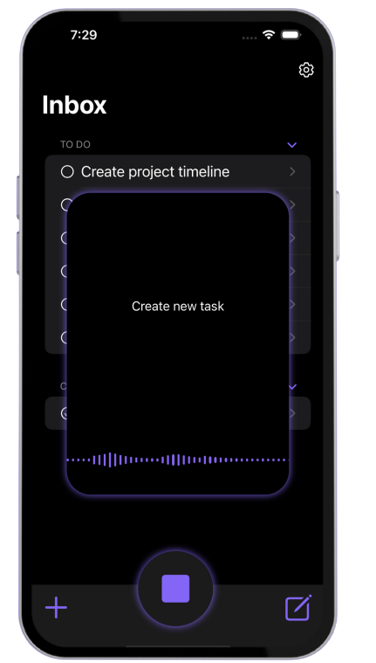
The journey to an autonomous budget starts with frictionless input. This is where Vozly shines today. While fully autonomous categorization is the future of the Agentic Economy, the biggest hurdle right now is simply remembering to log the expense. Vozly eliminates this friction entirely.
When you use Vozly, you are creating a perfect verbal ledger. You can speak to Vozly just like you would speak to a human assistant: “Hey Vozly, I renewed the software subscription for 120 dollars, and put 40 dollars of gas in the company car.”
Instead of fumbling with spreadsheets in the middle of a busy day, Vozly securely captures and transcribes these exact thoughts. It acts as your ultimate raw data collector. By instantly turning your voice into organized text notes, Vozly ensures no expense slips through the cracks, bridging the gap between your chaotic, fast-paced life and the structured financial discipline you need to succeed.

What is an autonomous budget report?
An autonomous budget report is a financial tracking system powered by AI that automatically logs, categorizes, and organizes your expenses from natural language inputs (like voice notes), completely removing the need for manual data entry in spreadsheets.
How does voice AI categorize expenses accurately?
Voice AI uses Natural Language Processing (NLP) to understand the context of your spoken words. If you say “taxi,” it knows to categorize the cost under “Transportation.” If you say “software renewal,” it automatically tags it as “Business Subscriptions.”
Can I use Vozly for my financial tracking?
Absolutely. While full autonomous categorization is the future, Vozly serves as the perfect first step: a frictionless verbal ledger. By simply speaking your expenses into Vozly on the go, you ensure every transaction is securely captured and transcribed into text, completely eliminating the risk of forgetting to track your spending.